













Created by:
 Amelia Wilson
If you’ve ever felt like the designated scapegoat for a failed product launch, you know how frustrating the blame game can be. As seasoned product marketer Jonathan Pipek explains in his article, PMM teams often take the fall when the revenue engine stalls.
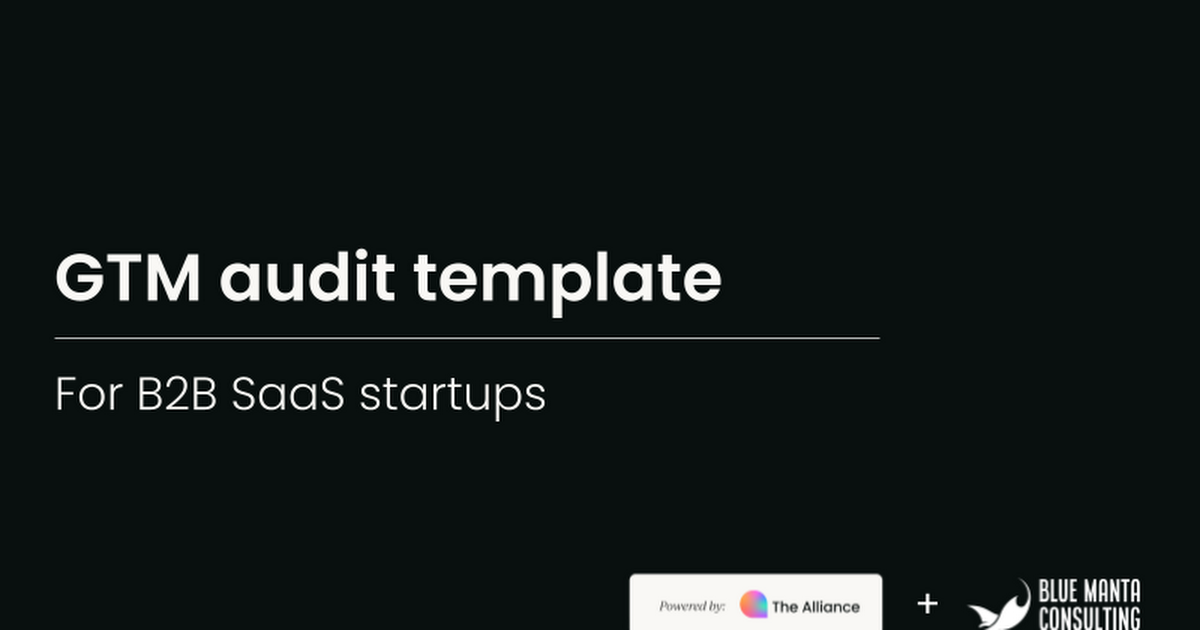
Jonathan’s go-to-market (GTM) audit template gives you a robust framework to uncover the root causes of dysfunction and take back strategic control.
What is a go-to-market audit template?
The go-to-market audit template is a comprehensive diagnostic tool designed to help you identify exactly where your strategy is breaking down. Instead of relying on surface-level observations, this template provides a systematic checklist to audit 10 key elements of your GTM motion:
- Foundations: ICP and personas, problem/solution, positioning and messaging, pricing and packaging, and competition.
- Execution: Sales pitch, marketing channels and partnerships, sales enablement, product adoption, and internal alignment.
The template guides you through interviewing stakeholders, analyzing CRM data, and conducting win/loss analysis to find the truth behind the friction.
Who is it for?
While this framework was built with B2B SaaS startups in mind, it’s a must-have for any product marketer who feels their strategic input is being sidelined. It’s specifically for you if:
- You're tired of being blamed for launches that weren't ready or sales targets that were missed.
- You see misalignment between leadership’s goals and what the product or market is actually ready for.
- You need to prove your value as a strategic leader rather than just a "collateral factory."
How to use the template
You don't always need to run a full, months-long audit to see results. You can use this template to drive change by following these steps:
- Identify the friction: Focus on the specific areas where your company is currently struggling, such as product adoption or ICP confusion.
- Gather the facts: Use the suggested methods – like listening to sales calls or interviewing prospects – to collect objective data.
- Audit the gaps: Use the diagnostic questions to see if your "foundations" (like pricing) actually support your "execution" (like the sales pitch).
- Meet with stakeholders: Share your findings one-on-one with the people most affected by (or responsible for) the friction. This builds a united front and ensures no one feels blindsided by the data.
- Present your findings: Once you have internal buy-in, present your audit report to the executive team with clear, data-backed recommendations for the path forward.
By using this template, you shift the conversation from "whose fault is it?" to "how do we fix this together?"
Download your GTM audit template




Product marketing insider
Thank you for subscribing
Level up your product marketing career & network with product marketing experts.
An email has been successfully sent to confirm your subscription.
 Follow us on LinkedIn



.svg)