







AI search has rewritten the rules of discovery. Today’s buyers are asking questions about your product in tools like ChatGPT and Gemini – and trusting the answers they get back.
That puts product marketing at the center of a new visibility challenge: making sure AI understands, trusts, and cites your product.
Want to rise to that challenge? You’re in the right place. In this article, we’ll cover:
- How AI search is changing buyer behavior and discovery
- Where AI pulls product information from – and why it matters
- What you can do now to increase your odds of being cited in AI answers
The shift to AI-driven discovery
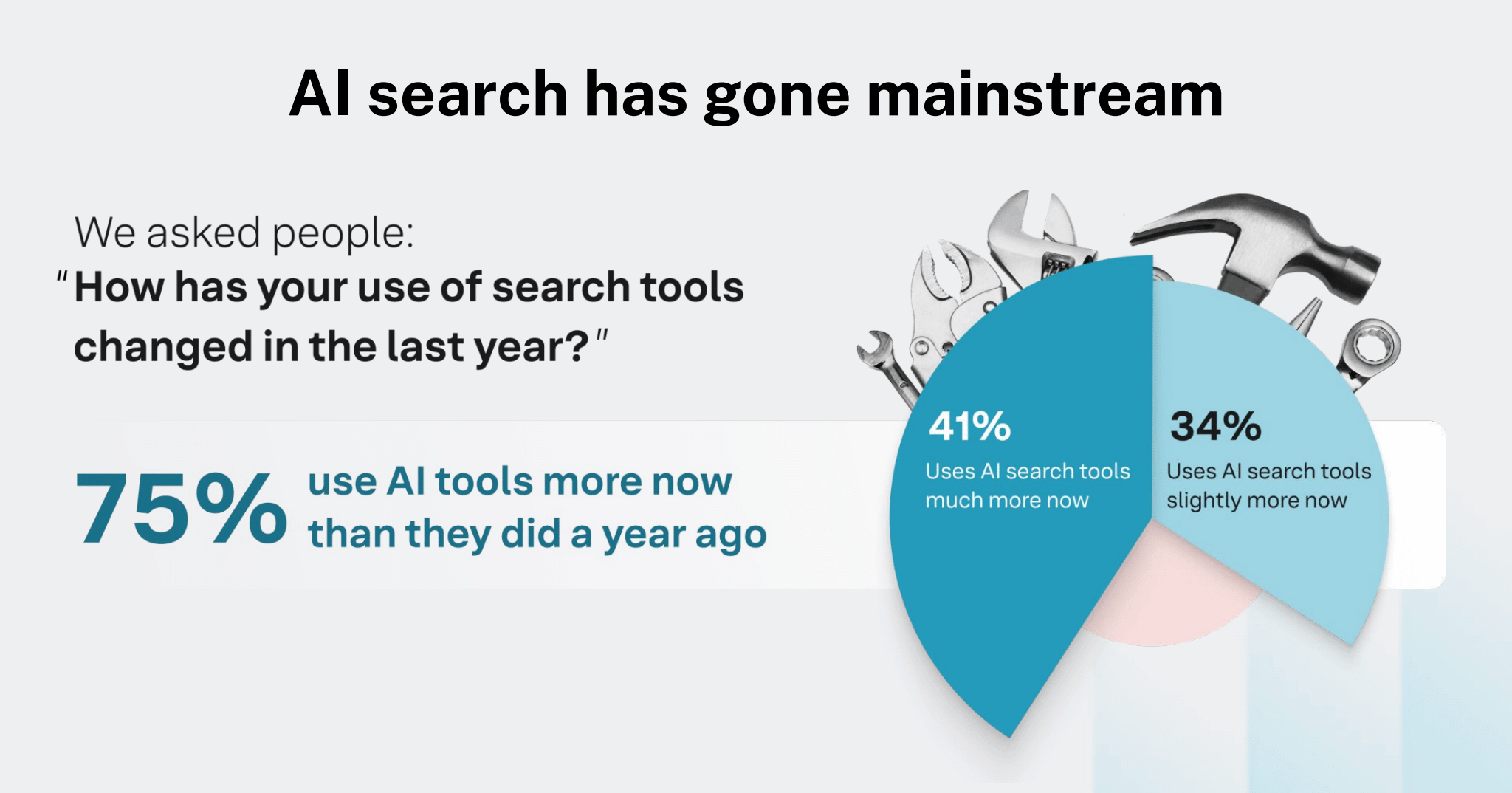
AI search has gone mainstream. It's not a side experiment or a trend to watch anymore; it’s a daily behavior. At Yext, we surveyed over 2,000 people across the US, UK, France, and Germany. We found that 75% of people use AI search tools more now than they did a year ago.
The adoption speed of platforms like ChatGPT is unprecedented in consumer technology. It took only two months for ChatGPT to reach 100 million users, compared to Facebook's four and a half years and TikTok's nine months. This is an unparalleled change that is rewriting the rules of awareness and discovery in real time.
Gartner projects that by 2026, traditional search traffic will drop by 25% as users increasingly turn to AI chatbots and virtual agents for answers. This isn't a distant future; it's happening already.
The top of the funnel is being redefined. As PMMs, we must think not only about how customers find us but, crucially, how AI interprets us.
The impact of Google AI overviews
This shift isn’t limited to new AI tools. Even in classic Google search, generative AI is influencing what people see first. For a growing set of searches, Google now displays an AI Overview, which is essentially the next evolution of the featured snippet.
When an AI overview appears, the click-through rate drops by half, from around 15% to 8%. This means fewer visitors and fewer organic conversions. It effectively puts a new layer between your product and your audience.
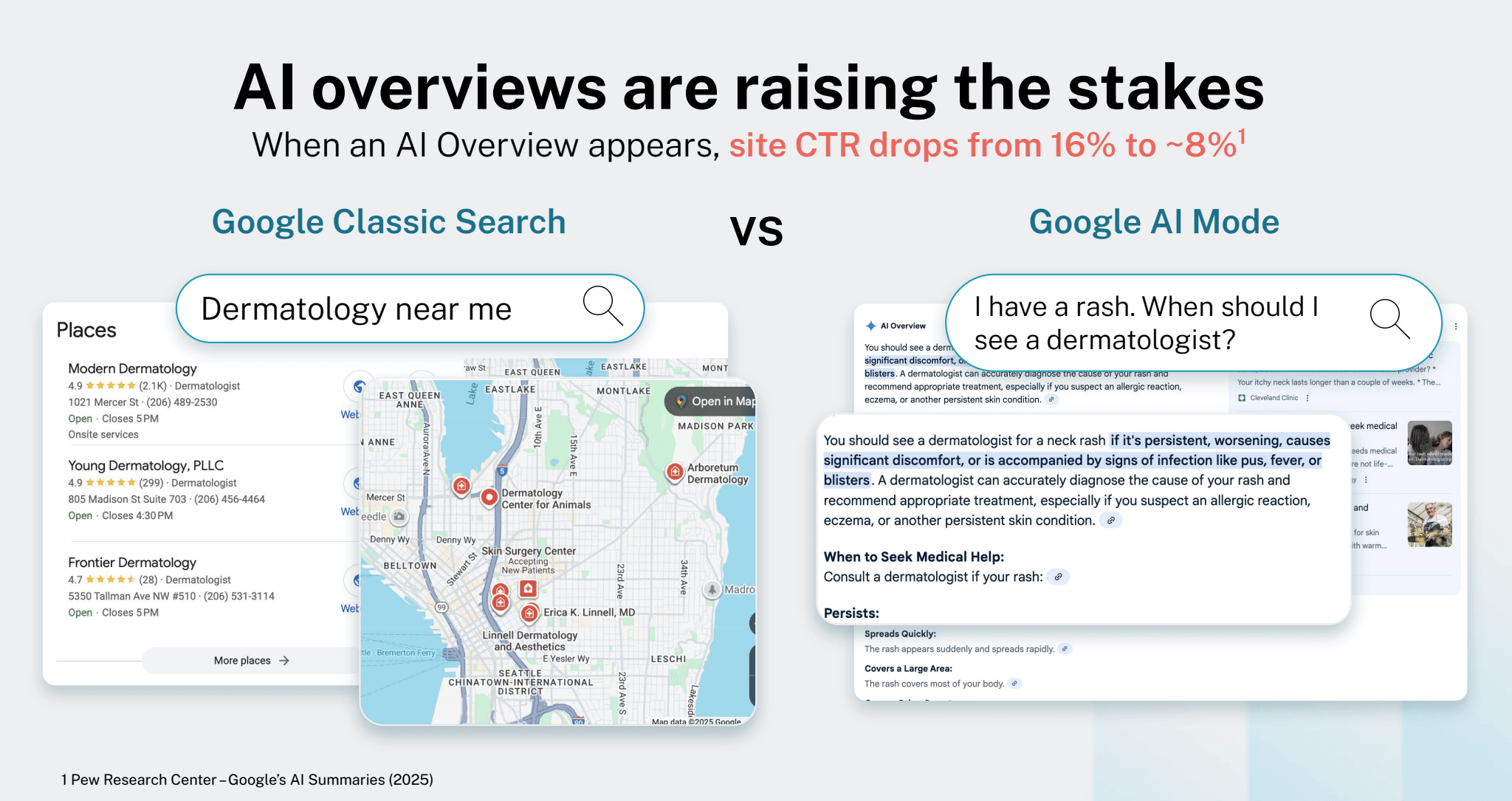
The AI overview summarizes your story using generative AI, pulling from online sources to give the user a relevant answer. The question is, whose data is it using to tell that story about your product? If the answer doesn't come from you and your company, it’s coming from someone else – and you’ve lost control over your narrative.
Classic search vs. AI search
In a classic Google search, the user does the work. They enter a keyword and get a ranked list of links, competing for clicks. Historically, we could boost visibility through SEO, a strong Google Business Profile, or paid ads.
AI search works differently. Users aren't looking for a list of links; they want clear, distilled, and synthesized answers. The AI does the work for the user. It scans countless sources, synthesizes the information, and delivers a single, conversational response, prompting the user for more detail if needed.
Showing up in these answers isn't about ranking for keywords or bidding on ads. It's about influencing the AI model to include your product in the answer it presents. You can't buy your way back in with ads, at least not yet, so organic influence is paramount.
For expert advice like this straight to your inbox every Friday, sign up for Pro+ membership.
You'll also get access to 30+ certifications, a complimentary Summit ticket, and 130+ tried-and-true product marketing templates.
So, what are you waiting for?
What AI pulls from to create an answer
Here’s a question I recently asked ChatGPT:
Who is the best orthodontist in Portland, Oregon that accepts Cigna insurance and offers Invisalign treatment?
The response I got was incredibly detailed and thorough. It was also far more helpful than a simple Google search, where I would’ve had to click through multiple sites to piece together the same answer.
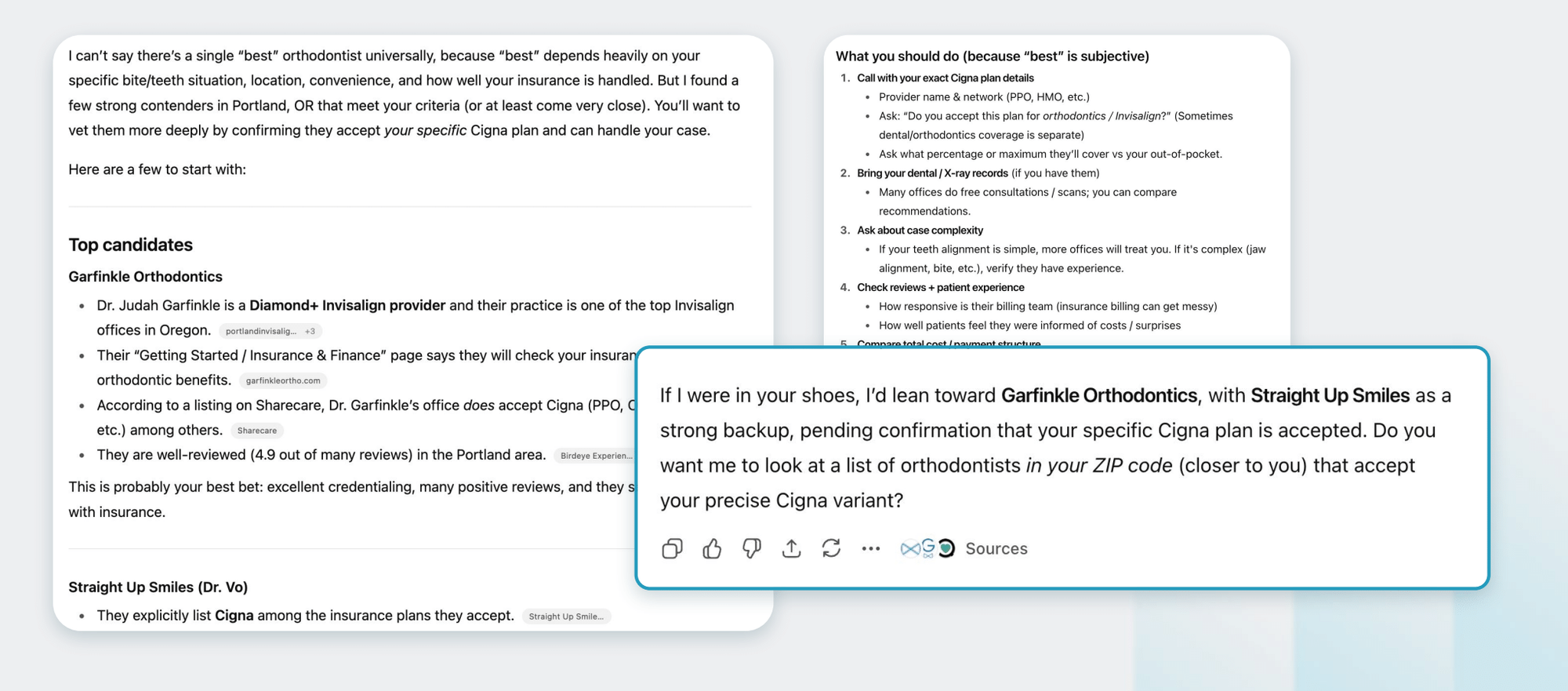
That got me curious. What data sources was ChatGPT actually using to generate this response? So, I clicked into the sources, and what I found was a massive list of citations. Orthodontist websites. Local and national directories. Review sites where people share their real experiences.
That transparency matters. As a user, it gave me confidence that the AI didn’t just invent an answer. It pulled from sources it trusts and cited them when prompted.
Why this is a product marketing problem
This brings us back to your role as a product marketer. You need to work with your colleagues across marketing to figure out how and where you show up in these sources.


Product marketing insider
Thank you for subscribing
Level up your product marketing career & network with product marketing experts.
An email has been successfully sent to confirm your subscription.
 Follow us on LinkedIn


.svg)