













You know that feeling when you walk into a high-stakes meeting and your confidence just... vanishes? Yeah, me too.
I used to be a VP of product marketing, and now I coach elite athletes and executives on mental performance and visualization.
Here's what I’ve learned: the mindset that allows Olympic athletes to perform under pressure is the same one you need when you're standing in front of your CEO, defending a product narrative you know will transform your company.
Let me take you back to a moment that changed how I think about confidence forever.
The activation pills that weren't magic (but kind of were)
Picture this: I'm backstage at an international figure skating competition. There are twenty thousand people in the arena, and one of the athletes I’m working with – let's call her Sarah – is about to compete for the first time in front of a massive crowd.
Her hands are shaking. She can barely catch her breath. She looks at me and says, "Kate, I don't think I can do this."
Here's what killed me: Sarah was the most prepared athlete I'd ever worked with. She knew every element, every transition, every beat of her program. But in that moment, she was showing up small. She was a nervous kid instead of the champion I knew she was.
So, I reached into my pocket and pulled out some "activation pills." I told her these belonged to her alter ego, the skater who has competed in front of a hundred thousand people and delivers when it counts.
Sarah looked at me like I'd lost my mind. Then, she took one, closed her eyes, and swallowed it with intention.
When she opened her eyes, everything changed. Her posture shifted. Her head went up. She took a deep breath and said, "I got this."
She went out there and delivered the best performance of her entire season.
Were those pills magic? Of course not. They were breath mints. But they activated an identity that was already inside her – the champion she needed to be in that moment.
That’s the champion’s mindset. It's not about becoming someone else; it’s about tapping into the calm, confident version of yourself that’s already inside of you.
For expert advice like this straight to your inbox every Friday, sign up for Pro+ membership.
You'll also get access to 30+ certifications, a complimentary Summit ticket, and 130+ tried-and-true product marketing templates.
So, what are you waiting for?
Why your brain defaults to playing small (and how to override it)
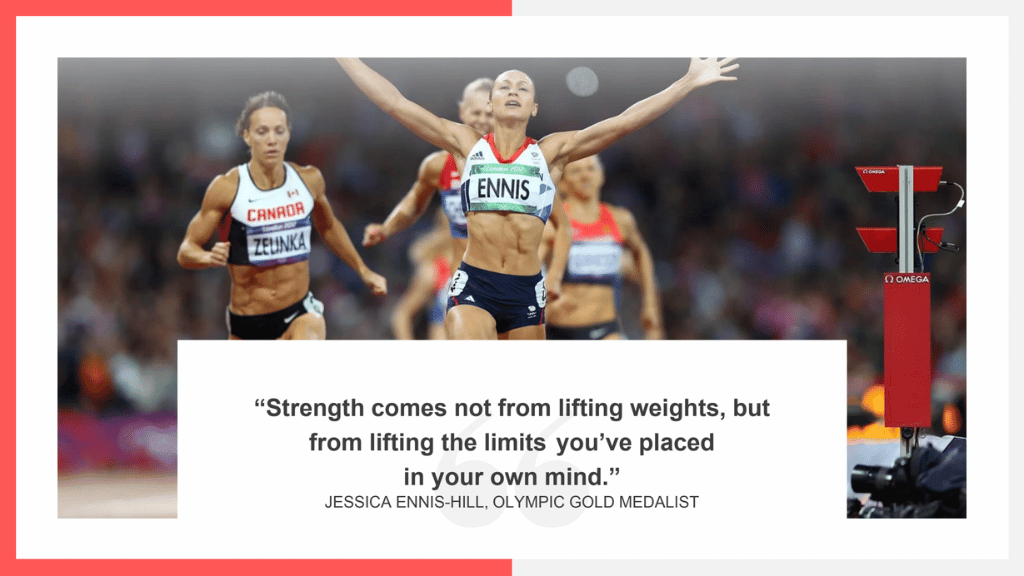
“Strength comes not from lifting weights, but from lifting the limits you've placed in your own mind.”
– Jessica Ennis-Hill, Olympic gold medalist
That's not just a great quote; it’s neuroscience.
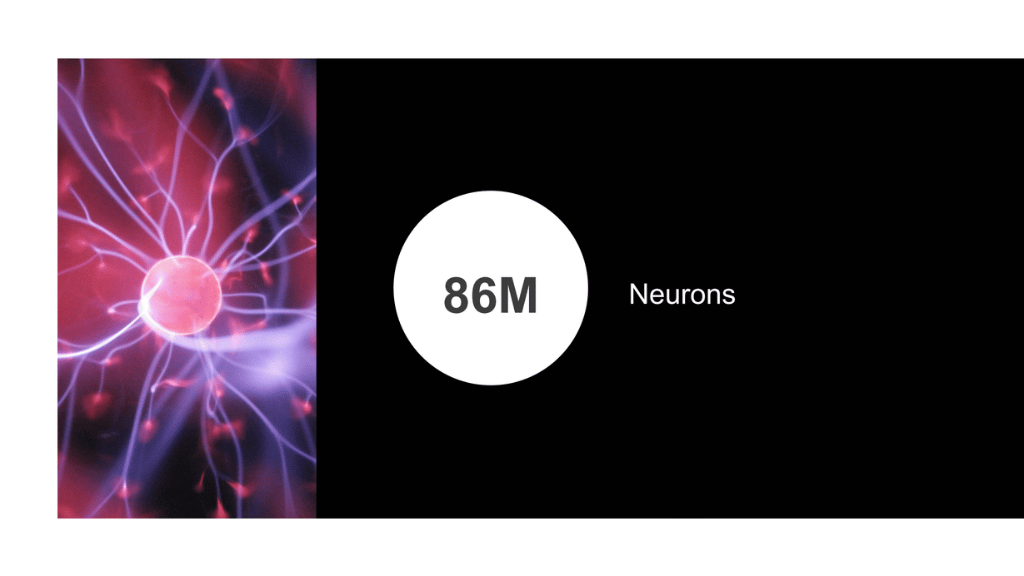
You've got 86 million neurons firing every second, telling you how to perform, how to think, and how to feel.
But here's the kicker: those neurons aren't wired for performance. They're wired for safety. Unless you train them otherwise, they'll default to keeping you safe. And safe, in your brain's world, means small.
Think about the disempowering scripts that run through your head:
- "I'm not good enough."
- "I'm not a leader."
- "I don't have time."
- "I'm not a good presenter."
These aren't facts. They're just stories your brain tells you on repeat to keep you safe from failure. The problem is that they also hold you back.
These stories limit us, but we can rewrite them. Let me show you how.
Your brain is a movie studio (and you're the director)
Imagine your brain as a movie studio.
🎬 You're the director, so you decide what story gets told.
🎭 Your motor cortex is the actor, rehearsing and performing what you tell it.
💡 Your amygdala is the lighting team, making things feel safe and bright, or dark and tense.
✂️ Your RAS (reticular activating system) is the film editor, and you can harness it to transform how the story plays out.
Your RAS is scanning hours and hours of footage – everything you see, everything you tell yourself – and deciding what makes the final cut.
When you tell yourself, "I'm not a good presenter," your film editor starts looking for proof. It finds that moment you hesitated, that feedback that stung, or that time you stumbled over your words.
But if you tell yourself, "I'm calm and confident when I speak," your editor starts looking for different footage – the times you held your ground, when the CEO nodded and said your narrative would change everything, or when your team rallied behind your vision.
Same brain. Different script. Completely different movie.
Visualization: Training your brain to see success
Thanks to neuroplasticity, we can change the stories we tell ourselves. The fastest way to do this is by giving yourself new footage. We do this through my favorite tool: visualization.


Product marketing insider
Thank you for subscribing
Level up your product marketing career & network with product marketing experts.
An email has been successfully sent to confirm your subscription.
 Follow us on LinkedIn


.svg)