

















Ever feel like product marketing only gets brought in after the real decisions are made?
You’re asked to build the deck, enable the field, and make the story land. It’s important work – but when that’s where your involvement starts and ends, PMM risks being seen as a service function rather than a strategic partner shaping outcomes upstream.
This article is about breaking out of that pattern. Not through org charts or titles, but by building the kind of cross-functional influence that changes how decisions get made – and who’s in the room when they’re made.
Here’s what we’ll cover:
- The foundation PMMs need to earn trust and credibility
- How to align with your CPO, CSO, finance, and customer success leaders
- Real-world examples of cross-functional influence in action
- Common roadblocks – and how to overcome them
- An alignment action plan you can start using today
Building your foundation
Before we dive into relationship-building, let’s start with the foundation. Here’s what product marketing needs to be:
- Experts in our market and our offerings: This is table stakes. If you don’t have a deep understanding of your market, your customers, and what you’re selling, everything else falls apart.
- Squarely in the middle of driving revenue growth: Everything ladders back to revenue. You may not own the number directly, but you do need to understand how your programs, projects, and decisions connect to it. That’s the bar.
- Focused on what the company is actually selling: You’re not just marketing products or features – you have to consider solutions and services, too. Plus, revenue comes from more than net-new business; cross-sells, upsells, and renewals all matter, and each requires a different motion. PMMs need to design for all of it.
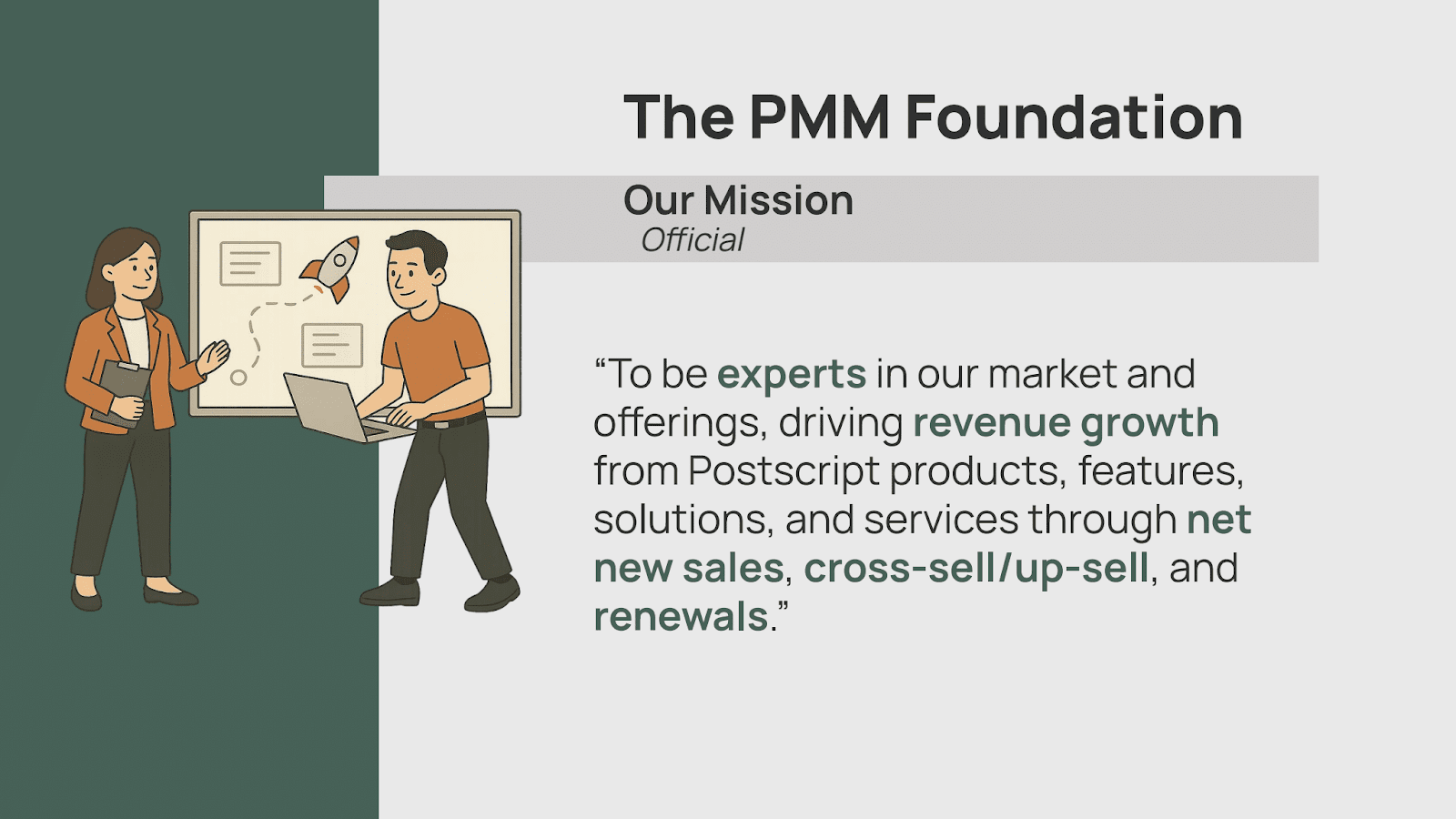
As Postscript’s VP of Product Marketing, I also have an unofficial mission: to make sure my team and I are working on the hardest problems in the company. Because when you’re trusted with the hard stuff, you’ve earned your seat at the table.
Meet your executive stakeholders
Now, let’s get tactical. I’m going to walk through the key stakeholders outside of marketing and how to work with them effectively.

For each one, I’ll break down what drives them, where their pressures and priorities lie, and the specific ways product marketing can influence outcomes.
I’ll also share real-world examples from my own experience and from teams I’ve led, showing how these partnerships work in practice – and how earning trust in these moments translates into real influence.
For expert advice like this straight to your inbox every Friday, sign up for Pro+ membership.
You'll also get access to 30+ certifications, a complimentary Summit ticket, and 130+ tried-and-true product marketing templates.
So, what are you waiting for?
Working with your Chief Product Officer
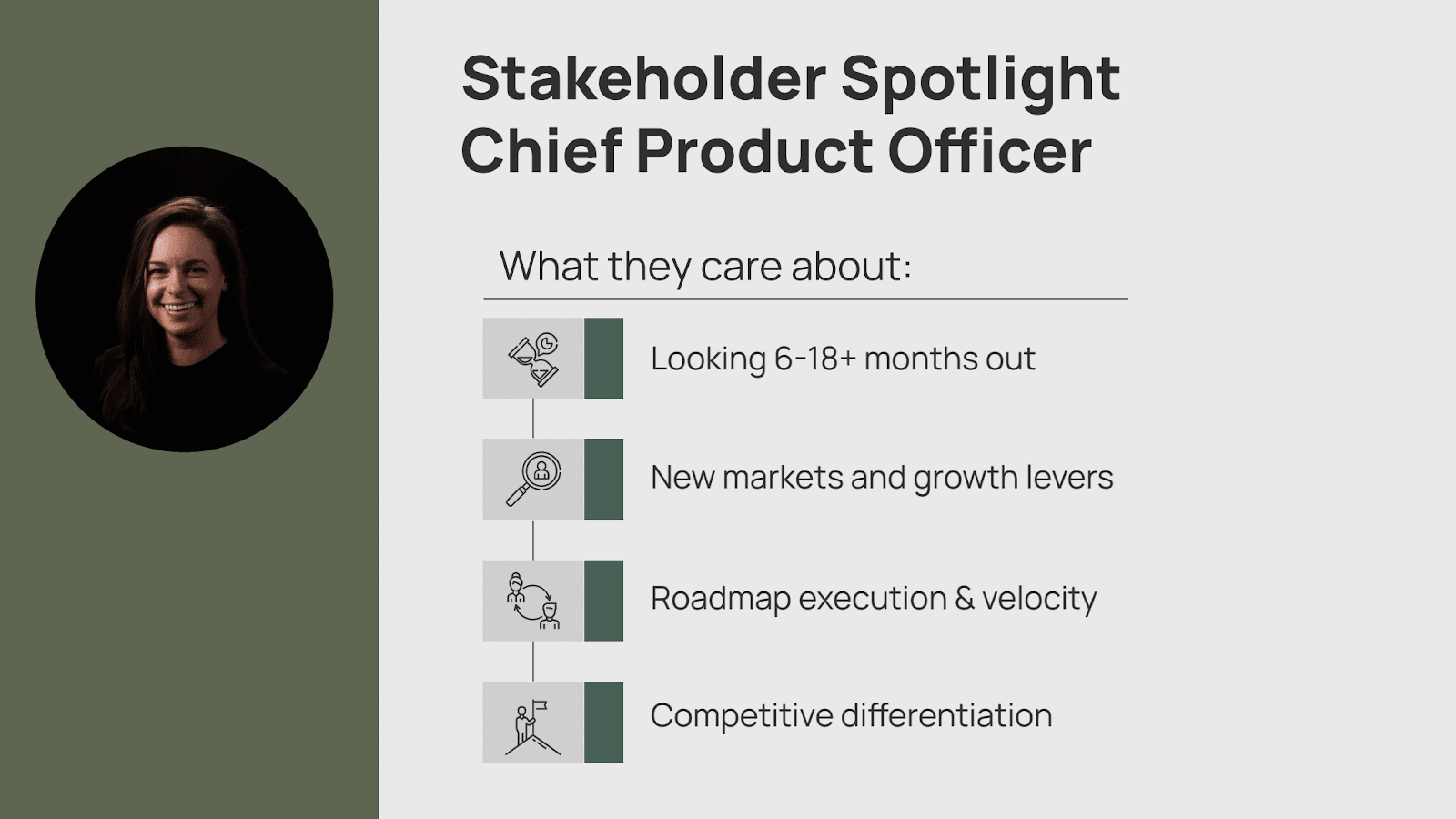
Your Chief Product Officer (CPO) is thinking long-term – six, twelve, even eighteen months out. They’re focused on the big questions: How do we enter new markets? What are our growth levers? How do we build something truly differentiated?
At the same time, they’re deeply concerned with execution: partnering closely with engineering, delivering on the roadmap, maintaining velocity, and building and defending a competitive moat.
How to align with your Chief Product Officer
- Get in the weeds and understand the product: Do discovery with the product team. Get embedded in how the product is built. Join their weekly or biweekly standups. Be part of the work, not just the output. At PostScript, we work in quads – a designer, a product manager, an engineering manager, and a PMM.
- Connect the roadmap to go-to-market plans: Product leaders have a lot coming at them. You can do them a huge service by taking what’s on the roadmap and connecting it to sales and customer success (CS). That’s one of PMM’s most important roles: packaging what’s being built, bringing it to market, and turning it into revenue.
- Partner on market sizing and opportunity analysis: Bring structure and perspective to investment decisions. Product marketing can add market context, customer insight, and competitive nuance to shape where – and how – the product team focuses.
- Run beta programs and customer feedback loops: Get alpha and beta programs going and create clear feedback loops. Product marketing can be a strong voice of the customer, ensuring real-world insights make their way back into product decisions.
Real-world example
Recently, we ran into real friction between our product and customer success teams around recruiting customers for early alpha tests. Product needed fast feedback to innovate and explore new revenue streams, while customer success was overwhelmed and focused on renewals. Those competing priorities created real tension.
So, product marketing stepped in. We authored a simple alpha recruitment process (with a little help from ChatGPT) and secured buy-in from our Chief Product Officer, Chief Customer Officer, and frontline leaders.
We also introduced a shared customer research tracker so everyone could see which alpha and beta tests were in progress and what was coming next. We supported it with a Slack channel and a biweekly standup.
Nothing about this was fancy. We started with Google Sheets and a basic Google Doc, aligned specific product managers with customer success leads, and got moving.
The result was shared prioritization on customer research. We’re now filling alpha programs faster and can more quickly decide which initiatives should move to beta and become launch candidates, or be deprioritized so resources can be reallocated.
The friction between product and customer success is noticeably lower. Sometimes, that’s the win: making things a little less chaotic.
Partnering with your Chief Sales Officer
Your Chief Sales Officer (CSO) operates differently from your Chief Product Officer. Where product thinks long-term, sales starts and ends with this quarter's number.
Pipeline saves lives. That's what my old boss used to say, and that's what sales leadership thinks about constantly.
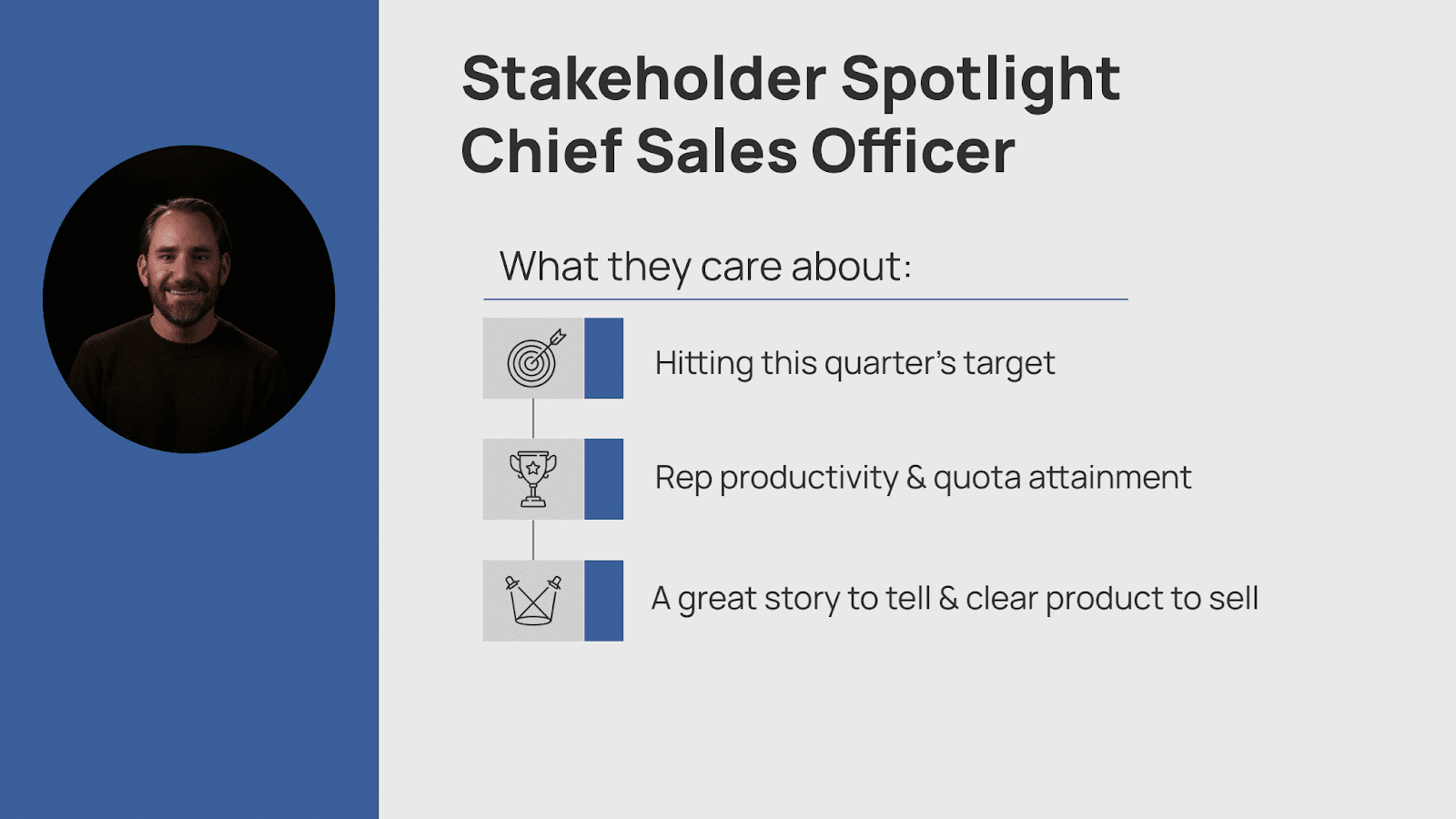
CSOs care about rep productivity and quota attainment. How many reps are hitting their number? That's how they succeed. They want simplicity, great stories, and clear products to sell.
How to align with your Chief Sales Officer


Product marketing insider
Thank you for subscribing
Level up your product marketing career & network with product marketing experts.
An email has been successfully sent to confirm your subscription.
 Follow us on LinkedIn



.svg)