











Nobody cares about your product.
I know, I know. That's a harsh way to start, but it's true. No one cares until they do.
As product marketers, we have exactly one job: make them care.
That's it. That's the whole game. We connect the product with the audience, and to do that successfully, we need something more powerful than features, more compelling than benefits, and more memorable than any comparison chart. We need clarity.
What I'm sharing with you today isn't an easy fix. It's simple – crazy simple, actually – but it's not easy. It requires effort and work on your part. But I promise you this: it's a proven approach to creating killer messaging.
The truth about message clarity
Before we dive into the how, let me share three fundamental truths about message clarity that you need to embrace:
- Message clarity is a two-way street. It's about ensuring our audience understands our message, yes, but it's also about understanding our audience.
- Message clarity is more than being understood. It's about being perfectly understood.
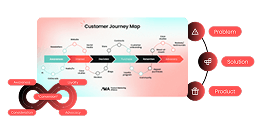
- Message clarity connects three essential elements:
- Your offering (the product, the outcomes, the core value)
- Your audience (their cares, wants, needs, desires),
- Emotion (the feelings of it all, both good and bad).
The neuroscience of decision-making
As I said, message clarity connects your offering, your audience, and emotion. That emotional layer matters because it reflects how decisions are actually made.
When we talk about features, benefits, and comparison charts, we’re speaking to only one part of the brain. But neuroscience shows that decisions are shaped by three distinct systems:
- The lizard brain, which handles gut reactions and fight-or-flight responses.
- The limbic brain, which processes emotion and memories – the "do I love this or hate this?" part.
- The rational brain, which adds language, facts, features, benefits, and all those comparison lists.
Here's the kicker: the lizard brain and limbic brain have no capacity for language. They operate purely on gut feel. Only the rational brain can articulate why we make the choices we do.
Maya Angelou said it best (and yes, I know using this quote is cliché):
"People don't remember what you say. They remember how you made them feel."
Now, sure – people might remember what you said, but they’ll always remember how you made them feel. When you appeal to people’s emotions early on, it stays with people throughout their entire buyer journey.
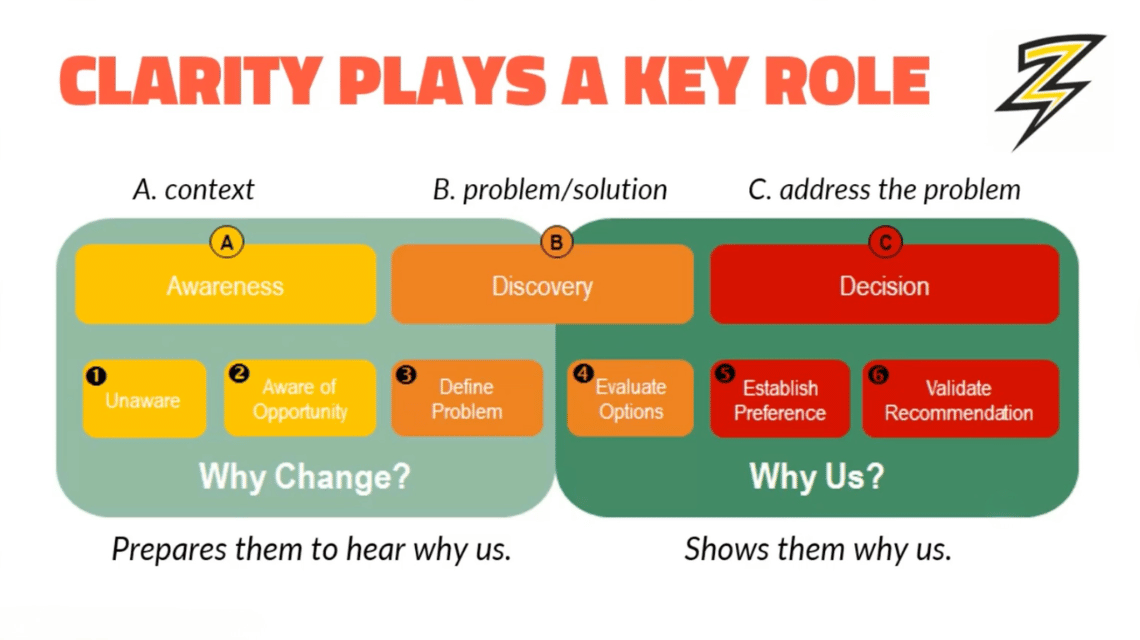
Think about the typical path to purchase. When we're dealing with an unaware audience – people who don't yet know they have a problem – the question is “why change?” That’s where emotion does its best work.
Later in the buyer journey, when we get to "why us?" and we're sharing benefits, features, and comparison lists, that emotion is still there, subtly influencing the buying decision.
For expert advice like this straight to your inbox every Friday, sign up for Pro+ membership.
You'll also get access to 30+ certifications, a complimentary Summit ticket, and 130+ tried-and-true product marketing templates.
So, what are you waiting for?
Clarity as your differentiator
We live in a world of clutter. Your prospects are constantly being bombarded with emails, ads, and pitches. In that environment, clarity is a huge competitive advantage. If your message is confusing, you lose. If it’s too long, you lose. If it’s about you instead of them, you lose.
Clarity creates stickiness – the kind of message that a salesperson can repeat without looking at a slide deck, and a prospect can explain to their boss the next day.
So how do you achieve true message clarity? Do you dumb it down? Go jargon-free? Use simple words? Make things concise? Yes to all of those, but they're just tactics.
The real work – the foundational part – comes first. Once you nail the foundation, then you can apply those tactics: simple words, concise language, talking like you're at a barbecue.
The hierarchy of clarity
To achieve true message clarity – to really connect product with audience – you need to work through five levels of clarity.
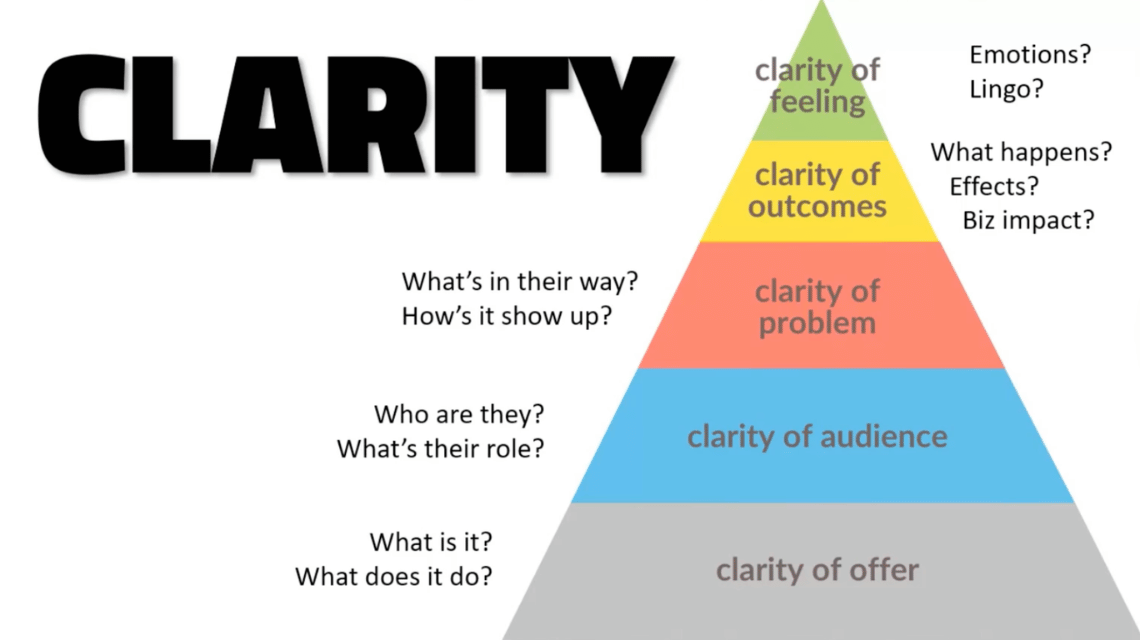
Clarity of offer
Clarity of offer always comes first. This is about your product. What are you selling? What does it actually do?
Yes, your external messaging should be audience-first. But internally, you have to start here. This is foundational work. You don’t have a message if you don’t have a clear understanding of the product itself. Before you can connect with your audience, you need to know exactly what you’re connecting them to.
Clarity of audience
Next comes clarity of audience. Who are you serving? What’s their role? What makes them tick?
You need to get crystal clear about the person on the other side of the message – their responsibilities, pressures, motivations, and goals. Jobs to be done can live here, or in the next level. The key is understanding not just who they are, but what drives their decisions.


Product marketing insider
Thank you for subscribing
Level up your product marketing career & network with product marketing experts.
An email has been successfully sent to confirm your subscription.
 Follow us on LinkedIn



.svg)