









You're creating content. Lots of it. And yet somehow, the pipeline stays sluggish, the sales team ignores half of what you produce, and customers churn before they've even gotten started.
The problem usually isn't the content itself – it's the model behind it. Most marketing teams are still designing content for a funnel that was built for a different era, while their buyers have long since moved on.
In this article, I'll make the case for moving beyond the traditional funnel toward a flywheel model that drives compounding growth – and show you what it looks like to design content for every stage of the buyer journey, not just the top.
The insights I'm sharing here come from lived experience, including mistakes I've personally made, so you don't have to repeat them.
The funnel has a problem
I'm going to take a contrarian view here. The funnel, as we traditionally know it, has some real issues.
- It’s linear by design: Customers aren't neatly walking through awareness, interest, intent, conversion, and adoption in that tidy sequence. They're bouncing across third-party sites, peer reviews, and answer engines long before they ever come into contact with your content.
- It requires constant spend: Top of funnel, middle of funnel, lower funnel. ATL (above-the-line) campaigns, nurture sequences, paid media activations – all of this costs serious money. The moment that spend stops, so do the results. If you're working with a limited budget, that’s a problem.
- It’s leaky at every stage. The funnel assumes a clean, predictable path from awareness to purchase – but customers don't read the playbook. They churn, stall, skip stages, and ghost you entirely. The funnel accounts for none of that messiness. You pour more in and get a few drops out. It's a cost center masquerading as a growth engine.
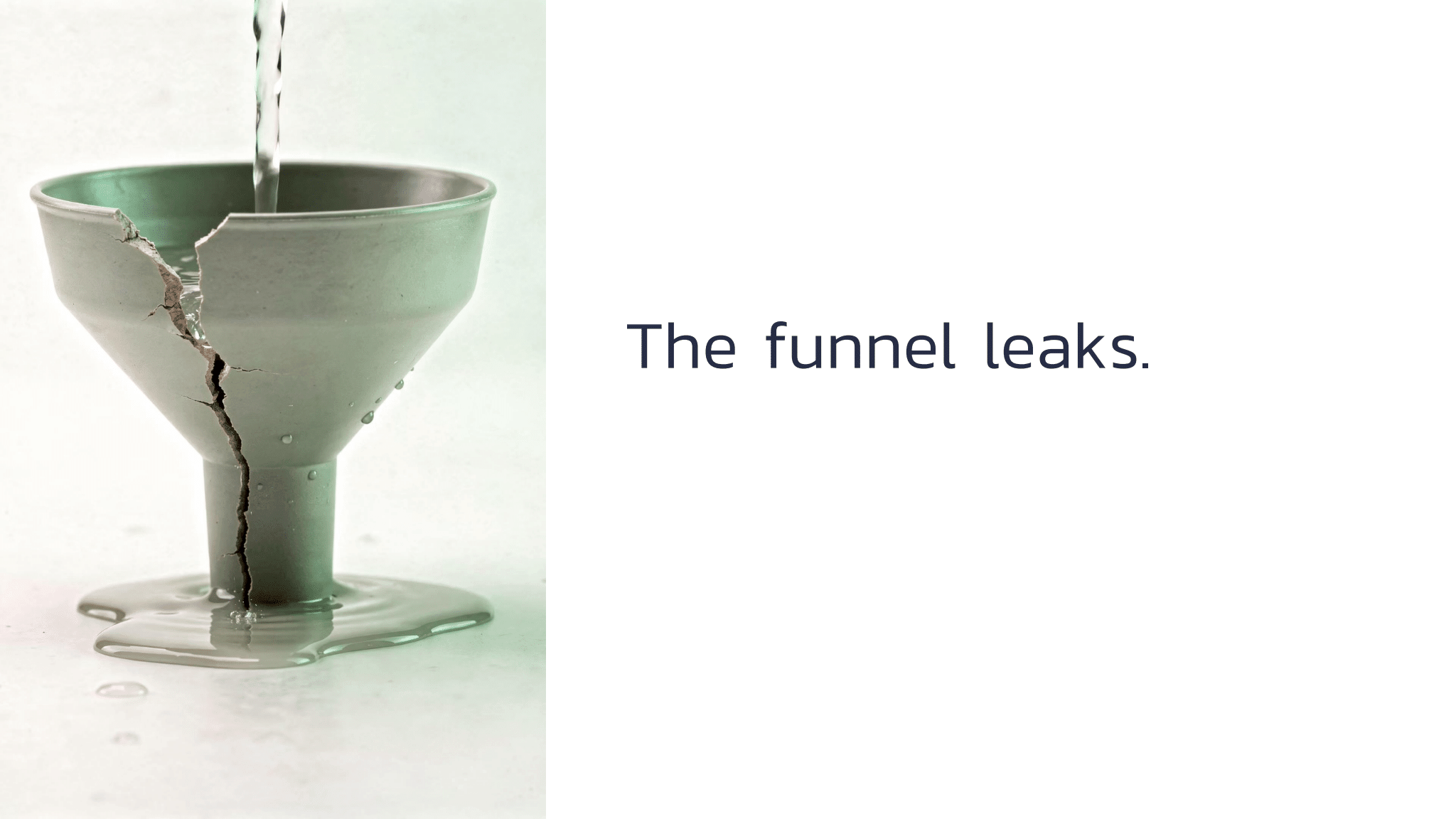
Now, I'm not here to tell you the funnel is dead. Many large enterprises still use it – including the ones I've worked for – and it does work in many contexts. But if you're a product-led company, a startup, or a team operating with a limited budget, the funnel alone won't carry you.
Enter the flywheel
So, what's the alternative? The flywheel growth model.
This isn't a new concept. Jeff Bezos introduced the flywheel model at Amazon. Jim Collins wrote about it in the early 2000s. More recently, Yamini Rangan and Brian Halligan over at HubSpot have made it central to their thinking. And in modern marketing, it's been getting renewed traction.
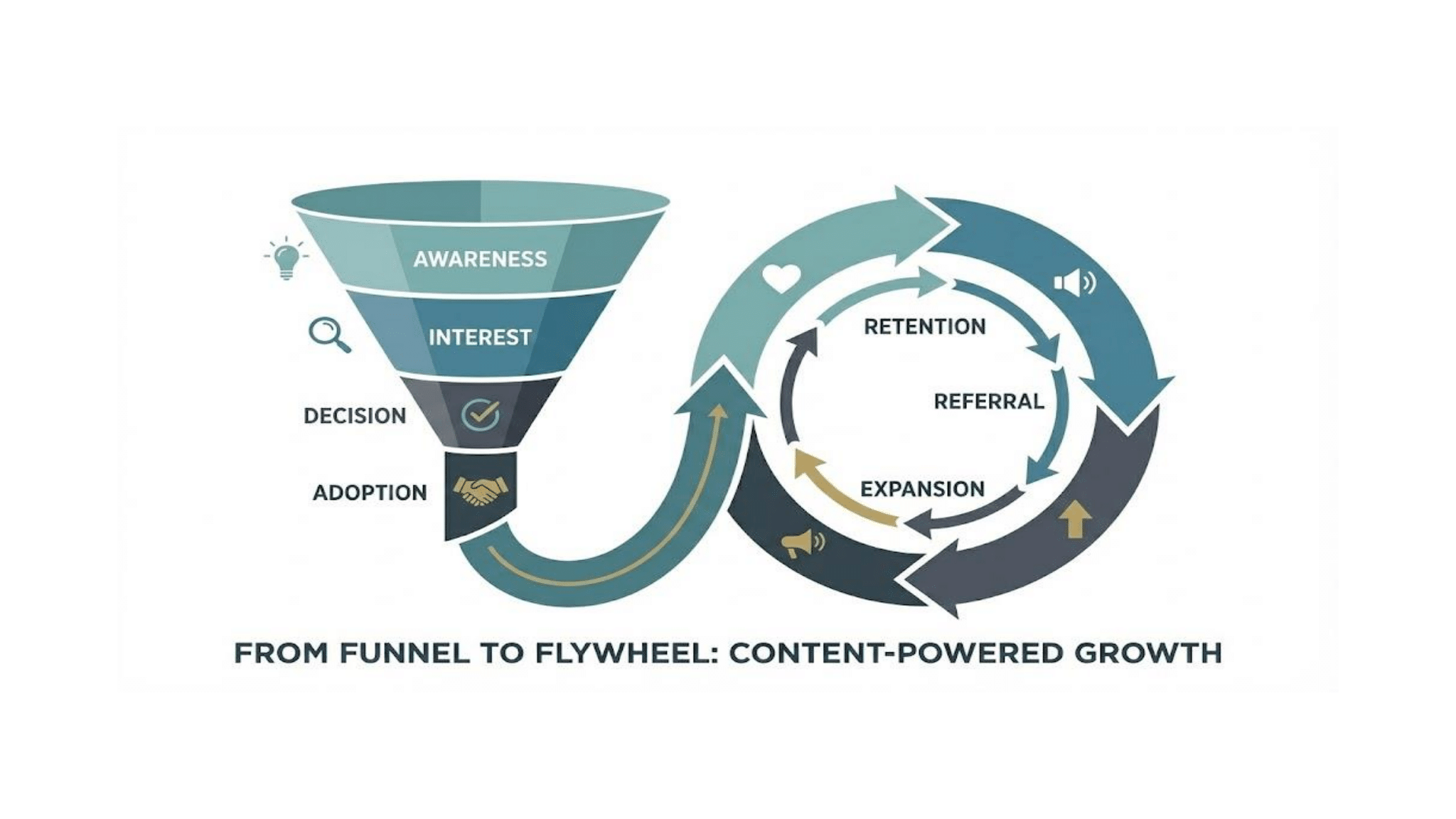
The funnel is like a love story that ends at the wedding. Boy meets girl, they fall in love, get married, the end. But that's not how relationships actually work, is it? The funnel is built for conversion. It's not built for retention. It's not built for compounding growth. Once you've acquired the customer, the funnel stops doing the work.
The flywheel picks up where the funnel leaves off, making sure you retain customers and turn them into advocates who fuel future growth.
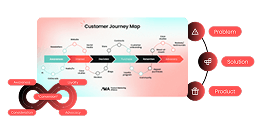
The flywheel typically has four or more stages, depending on how you frame it. The five I work with are:
- Acquisition: Bringing the customer in
- Activation: Getting them to use what they bought
- Retention: Keeping them engaged
- Referral: Turning them into advocates
- Expansion: Growing share of wallet
The activation layer is where customer needs and your product value meet. That moment of product-market fit is critical. If activation doesn't happen, retention won't either.
Referral is where the compounding effect really kicks in. Your customers become your advocates on Reddit, Discord, Trustpilot, YouTube, Amazon reviews, Yelp – wherever your audience hangs out. There's no advertising spend that can match the value of authentic word of mouth.
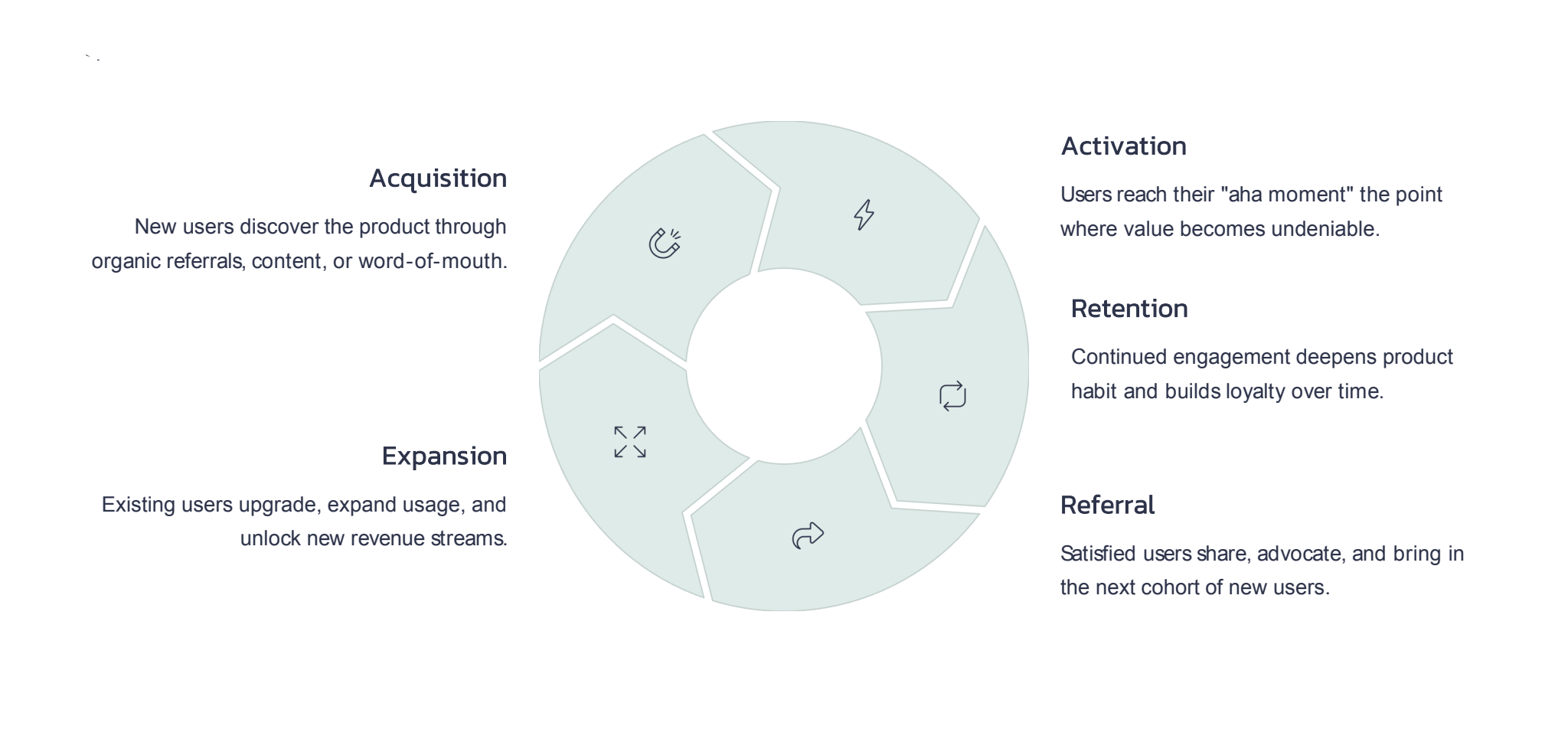
Expansion is where you go back in with content that says, "You bought 50 seats, here's why you might want 500." You drive cross-sells and upsells, and increase share of wallet. And when you launch a new product, those existing advocates jump right back into the acquisition stage. The cycle stays tight. It doesn't leak.
If you're product-led or a smaller company, you can use the flywheel exclusively. In large enterprises, you'll likely run both – the funnel for net-new acquisition and the loop for retention and expansion.
What happens when the loop breaks
Let me tell you about a time we got this badly wrong.


Product marketing insider
Thank you for subscribing
Level up your product marketing career & network with product marketing experts.
An email has been successfully sent to confirm your subscription.
 Follow us on LinkedIn



.svg)