









Let me share something that might sound familiar. You're sitting at your desk, having just wrapped up another successful product launch. The messaging was crisp, the sales team loved the enablement materials, and early customer feedback is positive.
You lean back in your chair, thinking, "This work speaks for itself."
But does it really?
I've been leading product marketing efforts at Virtana, and before that, I worked with AWS, Samsung, and HP. Through all these experiences, I've learned one uncomfortable truth: brilliant work that nobody knows about might as well not exist. And in product marketing, where we sit at the crossroads of the most important conversations in our organizations, this invisibility can be career-limiting.
The myth of the "just world"
There's this idea that's been floating around forever. Melvin Lerner studied it and called it the "just world hypothesis." Basically, it's the belief that people get what they deserve. Good people get rewarded, and bad people get punished. Simple, right?
This thinking isn't unique to Western culture either. One of my favorite Chinese phrases translates to "peaches and plums don't have to talk, yet the world beats a path to them." Beautiful sentiment. The idea is that quality work, like ripe fruit, naturally attracts attention and recognition.
You might be nodding along, thinking this sounds right. After all, shouldn't our work be like those peaches and plums? Create something excellent, and people will notice?
Here's where reality kicks in.
The Economist ran a landmark study about ten years ago. They asked executives across companies of all sizes whether politics often outweighs evidence in decision-making. The results? Overwhelming agreement that yes, politics frequently trumps data.
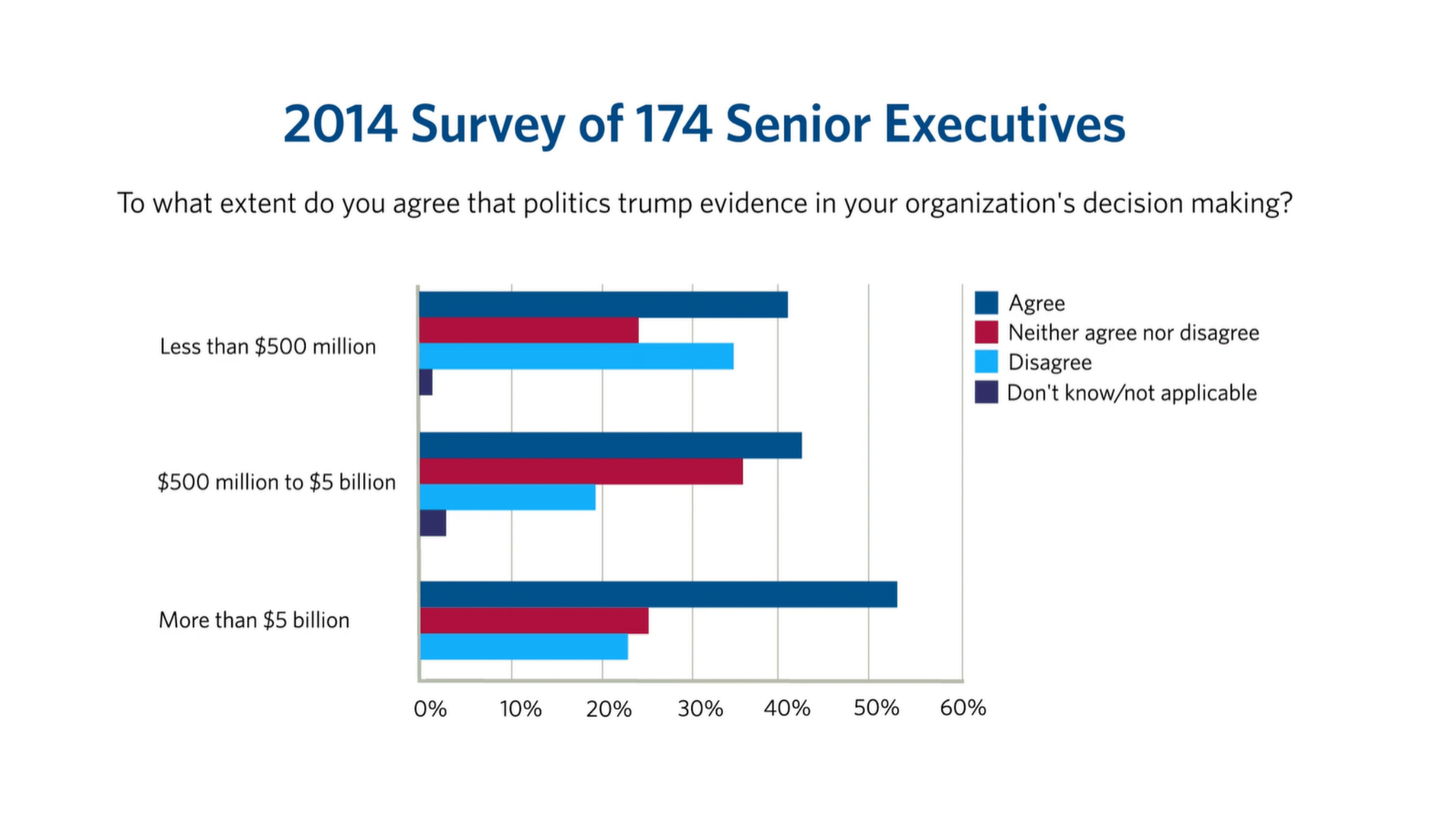
Think about that for a second. These companies exist to make money. They have shareholders, quarterly targets, and competitive pressures. Yet they still let politics guide strategy and decision-making. If that doesn't make you pause and reconsider the "my work speaks for itself" approach, I don't know what will.
Building your power base as a product marketer
Now, before you throw up your hands and decide it's all just a political game, let me be clear about something. I firmly believe we'll eventually create that just world we all want. Many of us in this field will be the catalysts for that change. But while we're working toward that future, we need to be proactive about establishing our ability to contribute and ensuring our impact is visible.
According to French and Raven’s model of social power, there are five main types of power you can develop within an organization:
💰 Reward power comes from having something others want and being able to give it to them. Think budget allocation or the ability to assign high-visibility projects.
🗡️ Coercive power is the flip side – the ability to take something away if people don't cooperate. Not my favorite approach, but it exists.
🔮 Expert power emerges when you become the go-to person for specific knowledge or skills. People seek you out because you know things they need to know.
✨ Referent power, sometimes called charisma power, comes from people simply liking you and wanting to follow your lead. Some have it naturally; others develop it over time.
👑 Legitimate power comes with titles and positions. Senior executives have it. So do police officers; you'd probably straighten up if one walked into the room right now.
For product marketers, expert power is our sweet spot. It's something we can control, develop, and demonstrate through our daily work. And that's exactly what I want to help you build.
For expert advice like this straight to your inbox every Friday, sign up for Pro+ membership.
You'll also get access to 30+ certifications, a complimentary Summit ticket, and 130+ tried-and-true product marketing templates.
So, what are you waiting for?
The quarterly review doc: Your secret weapon as an individual contributor
If you're an individual contributor, this first strategy is going to transform how you think about your work and its impact. It's deceptively simple, but most product marketers I coach have never done it systematically.
Step 1: List your achievements
Start by opening a document. Google Doc, Word doc, whatever works for you. This is going to become your quarterly review document, and it's going to make your life significantly easier.
First, you need to jog your memory about everything you accomplished last quarter. Go through calendar invites, sent emails with attachments or links, and all your Slack or Teams messages. You'd be amazed at how much you forget you've done.
Once you've got your list, organize it. Group items by your goals, objectives and key results (OKRs), or by functional area. Maybe you did a lot of sales enablement work – group all those deliverables together. Same for analyst relations, public relations, or product launches. If your company doesn't use OKRs, this is your chance to create your own and tie your work directly to them.
Step 2: Connect your achievements to business outcomes
Now comes the crucial part, and I mean absolutely crucial: block out time to think critically about how your work connects to business outcomes. No interruptions. No "quick questions" from colleagues. This is your time to draw clear lines between what you did and what it meant for the business.
Let's say you created a new case study. Don't just write "Created case study for Enterprise segment." Instead, think about which opportunities are using it. What's the pipeline value? You might write: "Developed Enterprise case study now being used in 12 active opportunities representing $2.4 million in pipeline."
Or maybe you supported analyst briefings. Instead of "Conducted 8 analyst briefings," try: "Led 8 analyst briefings resulting in 3 positive mentions in customer-facing publications, directly supporting pipeline development in target segments."
See the difference? You're not just listing activities. You're demonstrating impact.
Step 3: Lay out your vision for the next quarter
After documenting what you've done, write about what you're planning to do next quarter. This could be more of the same, scaled up based on your success. But I'd encourage you to think bigger.


Product marketing insider
Thank you for subscribing
Level up your product marketing career & network with product marketing experts.
An email has been successfully sent to confirm your subscription.
 Follow us on LinkedIn



.svg)