















If you’re anything like me, a broken go-to-market (GTM) is exactly the moment I like to join a company.
I’ve been the first PMM hire three times now, and honestly, this is the most interesting point to come in. Messy, high-stakes, slightly chaotic – but, you know, fun!
The story usually goes something like this: an ambitious founding team builds a solid GTM engine. Back when there were enough customers to give everyone a personalised touch, everything worked. Deals closed easily. Customers got white-glove onboarding. It all kind of clicked.
Until… scale happens.
Things start to feel a little stressy. Numbers don’t quite add up. Customers have tripled, but cracks are showing. Almost overnight, onboarding drags. The sales pitch stops landing. Churn creeps in.
And GTM breaks.
Which makes total sense. A scaling company is often still operating on founder-era assumptions. The original narrative, segmentation, and handoffs were never designed to survive volume.
It’s a moment startups dream about – and simultaneously fear. Growth is here, but everything feels fragile. Urgent. A bit desperate.
That’s usually when product marketing gets called in.
Everything, everywhere, all at once
I’ve been saying for a while now: for a profession dedicated to positioning and messaging, product marketing doesn’t have the strongest brand.
We’re told we sit at the intersection of product and marketing – not quite one, not quite the other. Critical, but somehow homeless.
For many PMMs, this is a sore point. I actually see it as both a blessing and a curse (more on the curse later).
In the chaos of company building, PMM has a rare privilege: agility. It’s one of the few roles that’s genuinely cross-functional by default. You’re expected to understand every department’s goals, constraints, and incentives – and, more importantly, how they collide.
An exec I once worked with put it perfectly: Product marketing exists to understand the in-betweens.
Which is precisely where GTM starts to show its cracks.
I’ve outlined my exact approach to understanding what has happened to GTM and how to reset it for scale in the rest of this article.
1) Get the lay of the land
When companies scale, GTM usually breaks because every team is doing the right thing in isolation.
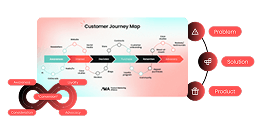
Before you do anything else, map the system.
Sit with every department head. Understand their process, their pitch, their metrics – and where things are breaking between teams, not just within them.
Once you see the full picture, you can start designing solutions that work beyond a single team’s lane.
2) Chat with your customers
If GTM has broken at scale, I’d put good money on your umbrella ICP no longer holding up. Segments – and their very specific, sometimes desperate needs – start to emerge. Often in ways the business hasn’t fully clocked yet.
You can (and should) do 40-50 customer conversations to really understand what’s going on. How are different segments using the product? What’s hurting most right now?
This won’t always change the product roadmap – that work is often locked in well ahead of time. But it will change how you communicate with customers across every touchpoint. Don’t miss that choice.
A note on AI: AI summaries of sales and CS calls are great for pattern-spotting at scale. But they’re not a substitute for sense-making. Nuance lives in tone, hesitation, contradiction – the stuff you only catch when you’re actually in the conversation.
And as a PMM, nuance is your job.
Skip the conversations, and whatever strategy you ship will be thinner for it.
3) Push for the data you need
As a former humanities student, I never imagined how much of my career would revolve around data.
But once you’re excavating a broken GTM, intuition alone won’t cut it. You need to understand how different segments behave inside the product – not just who buys, but who sticks, who churns, and who finds value fastest.
I’ve also spent time in product management, and that taught me the importance of staying close to the product – not just conceptually, but operationally.
This is where seniority really matters. Getting data prioritised is political. It takes influence. BELIEVE ME, I have been there.
But once you truly understand how each segment uses your product, the insights are gold.
Many PMMs shy away from this work. I’d argue the opposite: push for it. And when priorities aren’t clear, take it to leadership and get the buy-in you need to do the job properly.
4) Map, prioritise, and align
Fixing GTM at scale is a big story to tell – and an even bigger one to land.
Create a clear map of where GTM is breaking: onboarding, handoffs, segmentation, and expectations. Unpack your segments and identify where the biggest opportunities for impact lie.
Then build a prioritised task list based on impact, not volume. Add a few quick wins – momentum matters.
Critically: don’t gather everyone yet.
First, go back to each department head individually. Tell the story. Get alignment on what needs to change in their team, and what they’re willing to own. Only then bring everyone together.
That meeting isn’t for debate. It’s for commitment.
From there, set clear ownership and targets. Define what “fixed” actually means – whether that’s faster time-to-value, stabilised sales velocity, or clearer win/loss signals.
Now, about that curse…
You cannot fix GTM at scale alone.
You don’t have the authority. You don’t have the resources. And you shouldn’t have to.
A senior PMM’s job isn’t to execute every fix. It’s to design the system, align incentives, and influence the decisions that reshape how teams work together.
Product marketing is ultimately a sense-making role.
It’s about seeing the system when everyone else is stuck in their lane. Naming what no longer fits. And helping a company let go of the version of itself that got it here, so it can build the one it needs next.
Product marketing is ultimately a sense-making role.
It’s about seeing the system when everyone else is stuck in their lane. Naming what no longer fits. And helping a company let go of the version of itself that got it here, so it can build the one it needs next.


Product marketing insider
Thank you for subscribing
Level up your product marketing career & network with product marketing experts.
An email has been successfully sent to confirm your subscription.
 Follow us on LinkedIn



.svg)
Start the conversation
Become a member of Product Marketing Alliance to start commenting.
Sign up now