










Most product marketers get promoted because they're excellent executors. Then, overnight, they're expected to be strategic leaders. The problem is that no one is explaining what that actually means or how to get there.
That's not a personal failing; it's a structural one. Product marketing is still a young function, and for most of our careers, there simply weren't any VPs or directors of PMM to learn from.
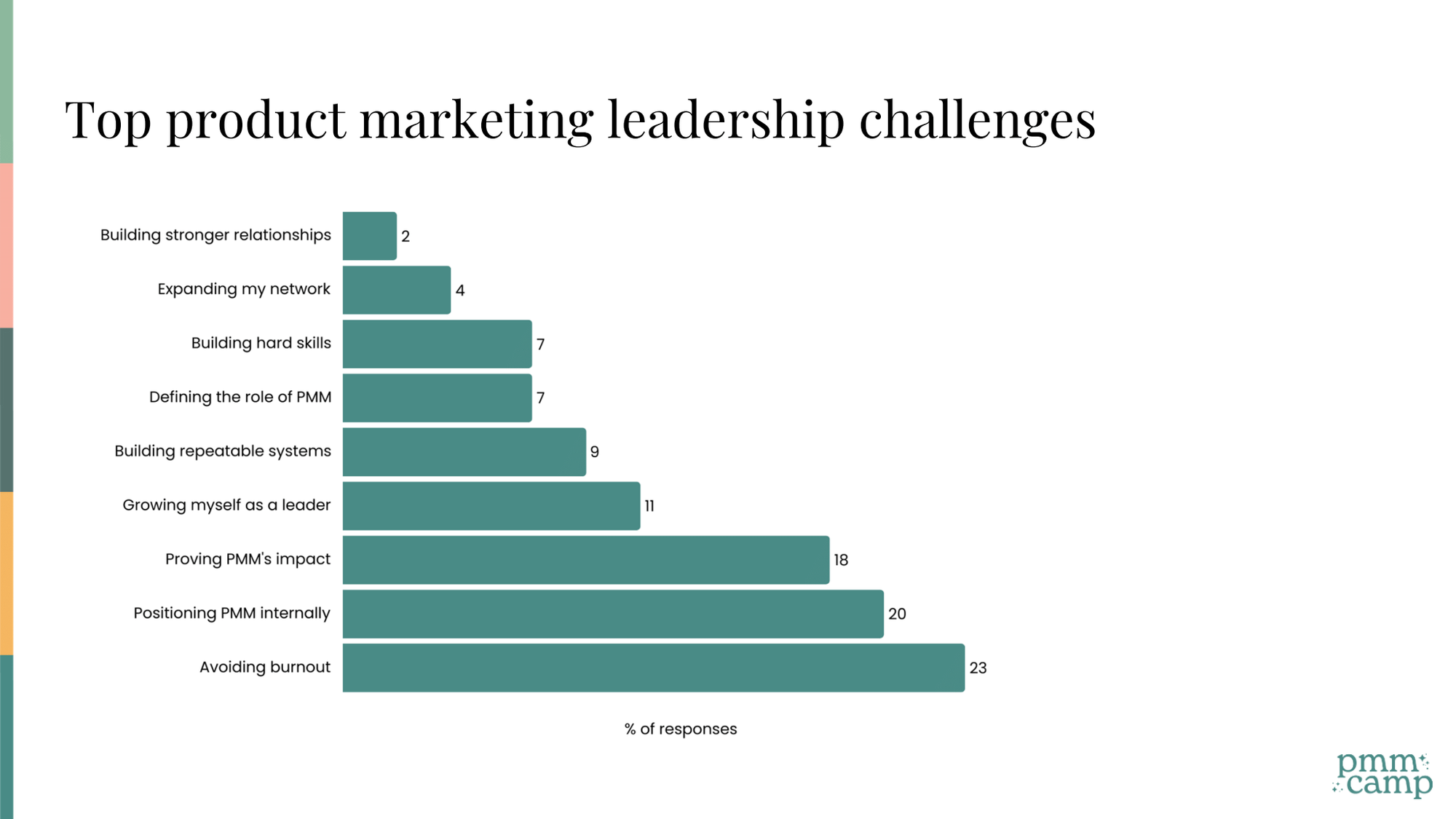
I wanted to understand how widespread this was, so a few months ago I surveyed hundreds of PMM leaders. Their top challenges weren't about hard skills or defining the role. They were about proving impact, earning a seat at the table, and avoiding burnout.
Interestingly, 52% said they'd know they'd made it as a leader when they were trusted to set business strategy – something our function still hasn't figured out how to teach.
I've spent the past year going deep on this problem, drawing on my own experience and the stories of hundreds of product marketers I've coached. I've learned that the shift from executor to leader isn't about choosing between doing and thinking. It's about developing leadership range: the ability to activate different modes depending on what the moment requires.
In this article, I’ll share a framework to help you do just that. It’s built around the five leadership modes you need to be able to activate, and the 10 habits that strengthen them.
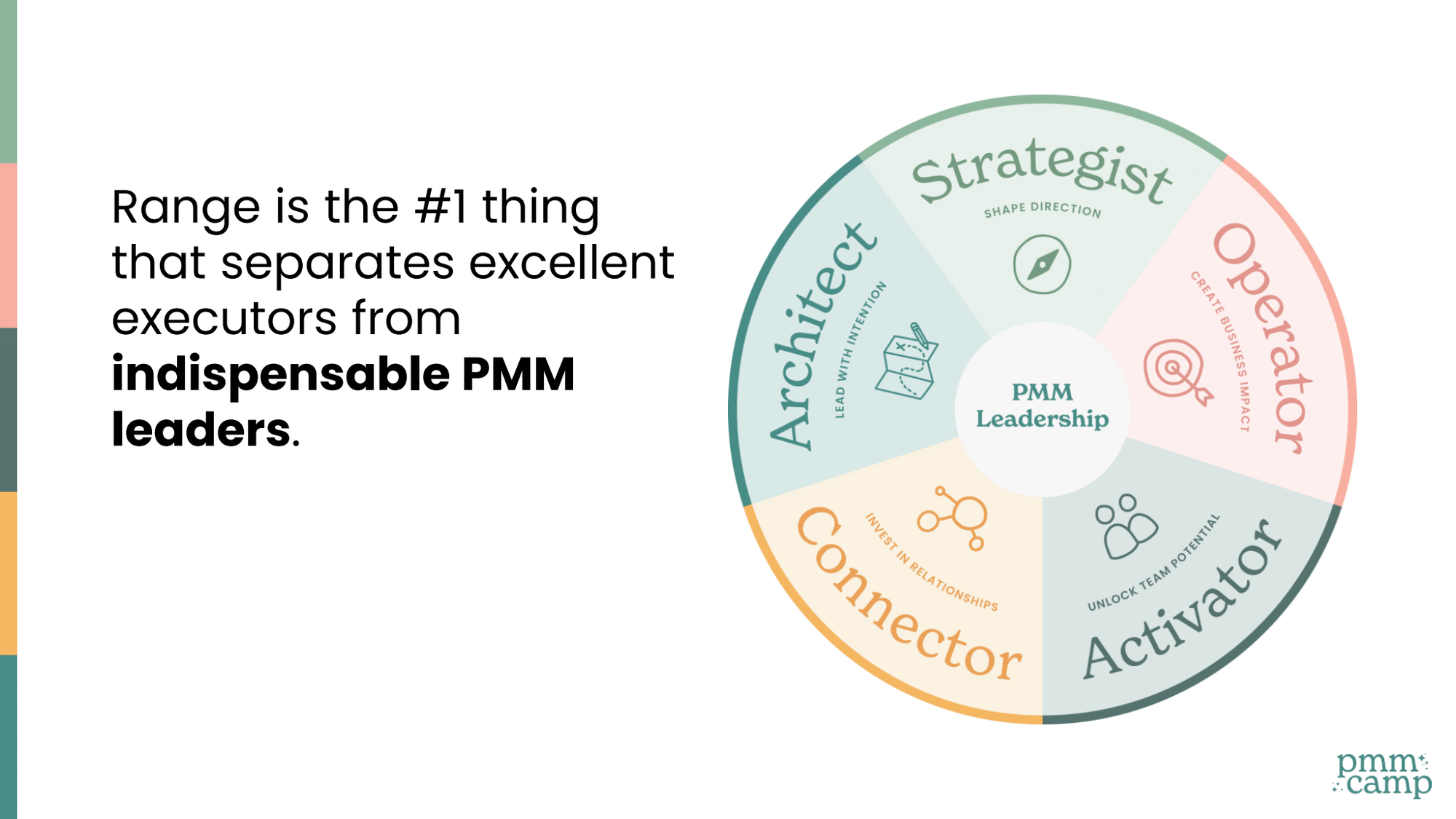
Mode 1: The Strategist
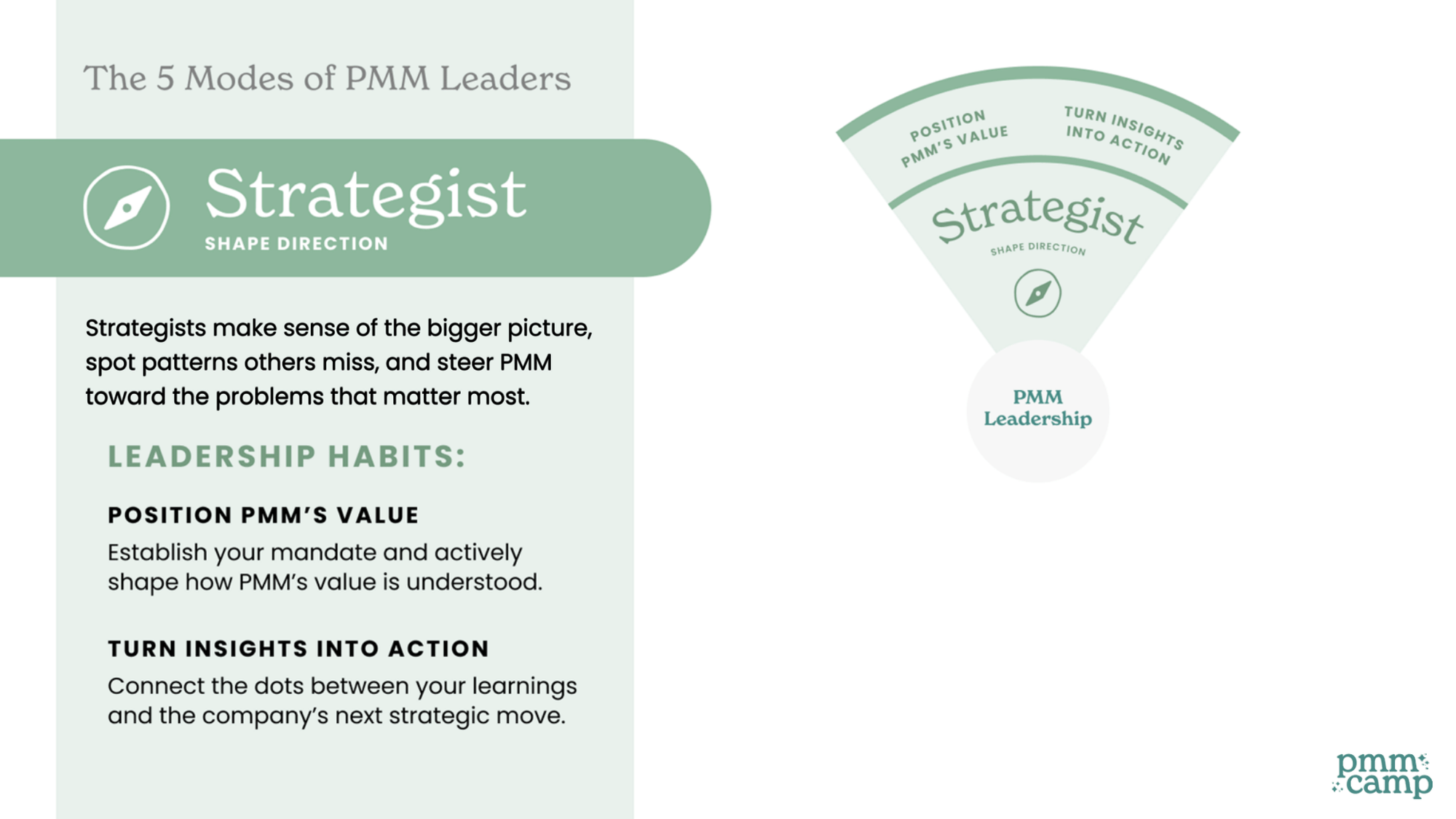
The Strategist is the part of you that shapes direction. It's the part that makes sense of the bigger picture, spots patterns others miss, and identifies problems worth solving.
To make this real, I'll use an example from my own career.
Let me take you back to 2018. I'd just started a new role as Director of Product Marketing at Unbounce, a landing page building platform. During my first week of stakeholder interviews, I realized we had no idea who our best-fit customer was. I asked ten different people, and got ten different answers. Even worse, everyone seemed okay with it.
I could have just accepted the job as it was. I could have done product launches, built competitive programs, and stuck to the standard product marketing playbook. Instead, I leaned into my Strategist mode and looked for a problem that no one else was solving.
What I saw was that the landing page market was growing much faster than Unbounce was. That told me our growth issues weren't because of the market, they were because of our strategy.
So, I dug into the data and ran cohort analysis. I realized that a generic approach to segmentation was holding us back. Then I brought all of that forward as an opportunity people couldn't say no to. Because I sourced the problem, I got to raise my hand to solve it.
For expert insights like this, in full, every Friday, sign up for Pro+ membership.
You'll also get access to 30+ certifications, a complimentary Summit ticket every year, and 130+ product marketing templates.
So, what are you waiting for?
How to activate your Strategist mode
If you’re wondering, “Do I need to tap into my Strategist mode a little more?”, here are some signs to look out for:
- Your product marketing function is defined by outputs, not the problems it owns
- You're constantly taking orders, not setting direction
- You're presenting data points instead of recommendations
So, how can you strengthen your inner Strategist? Here are a few behaviors to build:
- Identify the problems you are uniquely qualified to solve
- Clearly define your team’s mandate and scope around solving those problems
- Shape the opportunity and recommend one specific path forward
Leadership habits to strengthen your Strategist mode
Here are two habits that strengthen this mode:
- Positioning PMM's value: Establishing your mandate and actively shaping how product marketing's value is understood across the business
- Turning insights into action: Connecting the dots between what you're learning and the company's next strategic move
Mode 2: The Operator
People often think of Operator mode as focusing on execution, but it's so much more than that. The Operator is about strategically executing on work, driving impact by grounding your work in what the business cares about.
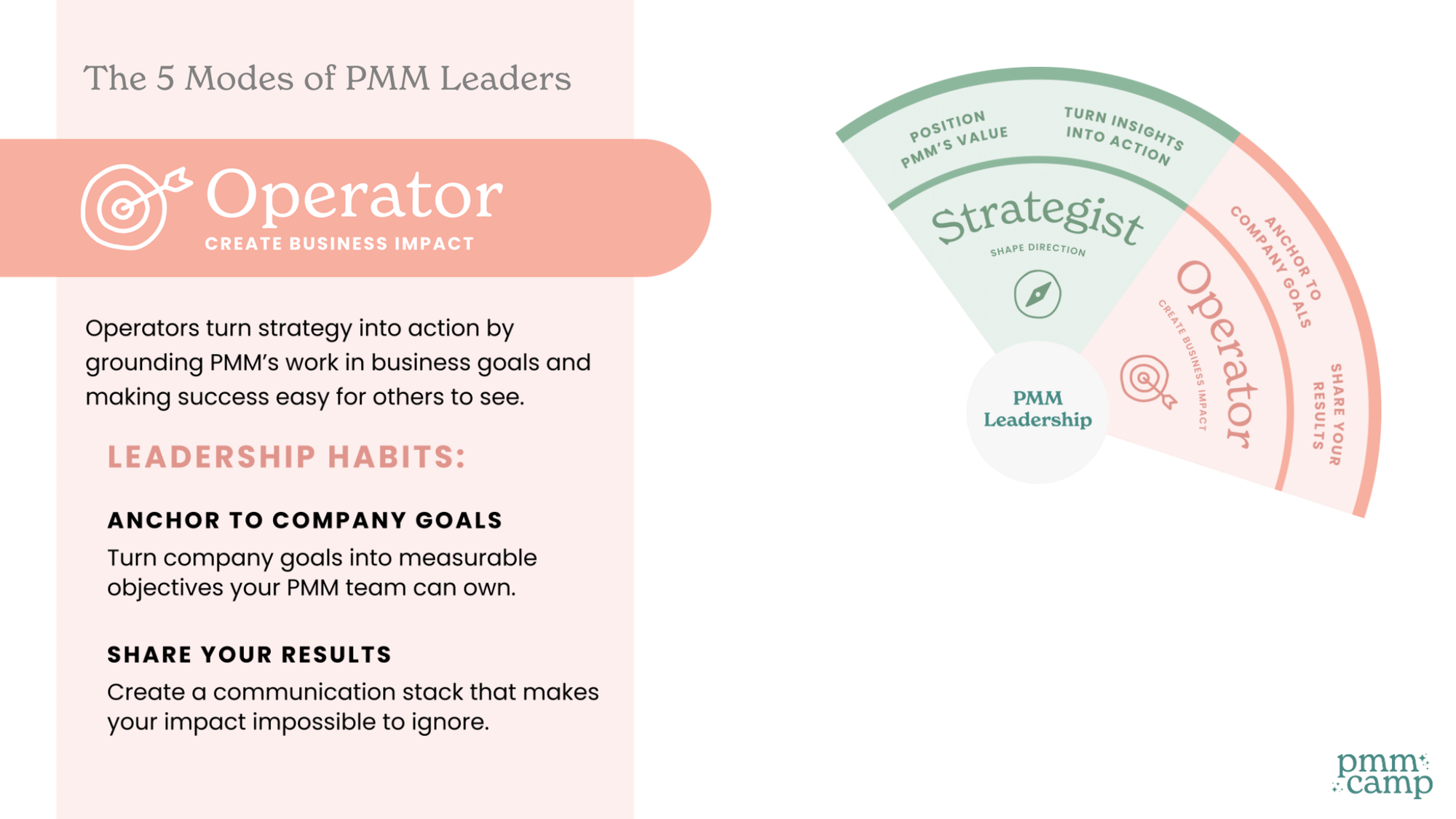
Back to my Unbounce example, I'd surfaced this amazing segmentation opportunity that I believed would change the business. Next, I needed to get it resourced and prioritized as a major project. I could have just said, “Hey, I found this project, let's work on it,” but then it probably would have become a side-of-desk effort.
Instead, I dug into what mattered to the business, mapped our work to the company's five biggest priorities for the year, and positioned the segmentation project as a way to accelerate progress on each one. The result was that we got resources, priority, and support well beyond my own team.
How to activate your Operator mode


Product marketing insider
Thank you for subscribing
Level up your product marketing career & network with product marketing experts.
An email has been successfully sent to confirm your subscription.
 Follow us on LinkedIn



.svg)