








Like we did at Stakemate.
The end of the year is a great time to reflect on the past 12 months. When trying to build loyalty and stickiness, showing users a reflection of how they used your product during the year can also be a retention tool.
If you’re a product marketer or product manager, you may be wondering whether you should build your own version and, more importantly, how you can do this. I’m going to help you answer both questions.
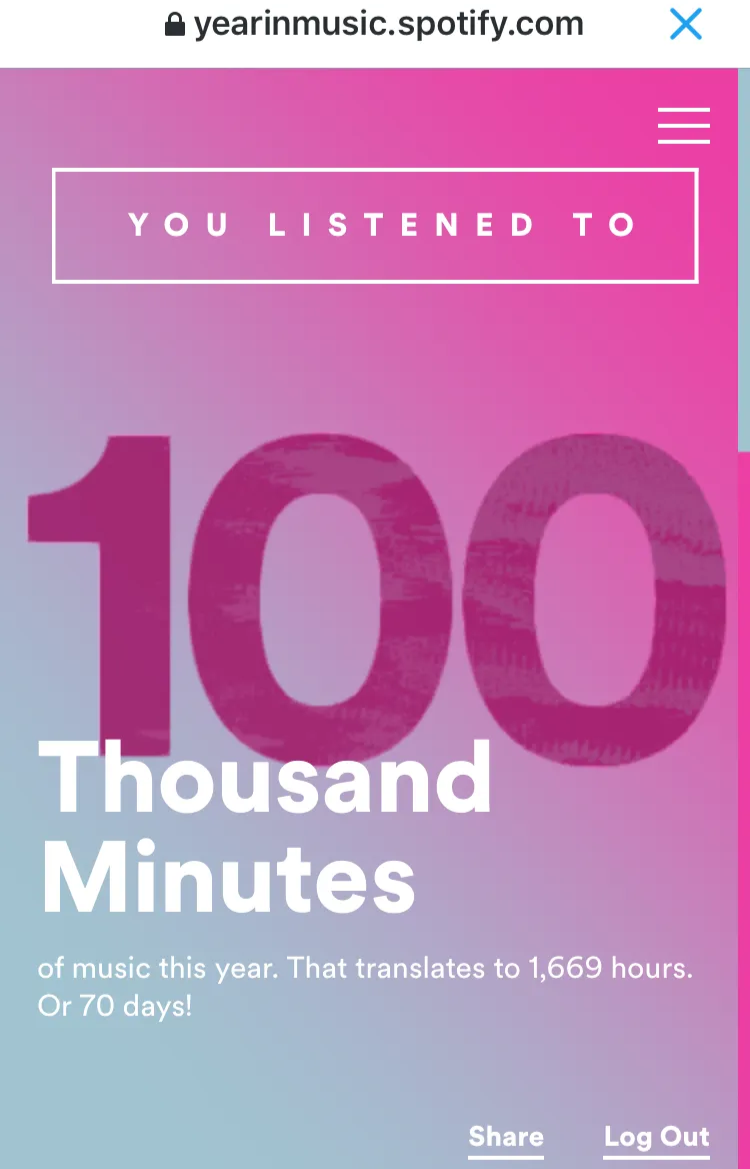
While a lot of products are doing this type of annual review, it is still a strong retention lever. Users love having a personalised, shareable visualisation of how they used an app.
The good news is that marketers can now launch this without using valuable dev resources, or having to justify use of said resources. But perhaps more important than how to build it, is whether you should even launch such a product, which is what I’m going to walk you through.
Step 1: Asking if you should do a yearly wrapped
There can be a lot of back and forth internally about doing this project–some may think it’s not relevant, others will want to do it just for the experience or fun of it.
Ultimately, the decision comes down to a simple checklist. If you can’t answer yes to at least 4 of the below, then you probably shouldn’t do a yearly wrapped.
Step 2: Defining the outcome
This step is like writing a UAC ticket. You’re defining what you want to go into your wrapped. You can even wireframe how you want the stats to appear, and in what order. The three things you need to define during this step are:
Target users
Who gets a wrapped? There should be a minimum threshold of available data for users. Otherwise you risk sending them something that will seem irrelevant and boring. We settled on users who had at least 6 bets on the app during the year.
Features
What goes in your wrapped? What are you summarising or presenting to your users?
We looked at all the wrapped products in the market, and realised the features generally fall into 3 baskets. You can use this as a guide; try and hit at least 2 metrics for each type of feature:

Ideally, make sure these connect back to your value proposition and promise. In our case, being generous and giving away free bets, so we told users exactly how many free bets they got from us during the year.
Success metrics
This is also the stage to define your project KPIs and definition of success. Generally, you should link this back to retention, brand visibility and loyalty as well as some WoM growth. Unless you already have a strong social media presence, this project is unlikely to lead to user acquisition or direct growth.
Step 3: Data analytics
At the end of the day, any yearly wrapped is a data visualisation project. I’m pretty lucky in that I have a background as a data analyst and had a really strong analyst on my team to help with the number crunching.
But even if you don’t have a data analyst, the calculations required (such as aggregating, or ranking) shouldn’t be too complicated, and you can probably use LLMs to help you write the python (or R) code to do it.
Since the data doesn’t need to be up-to-date or live, you can do this project using static data. Extract anonymised user data using SQL, then calculate all the required fields for each user and create a CSV ready to go for the next step.
Step 4: Build AI, build!
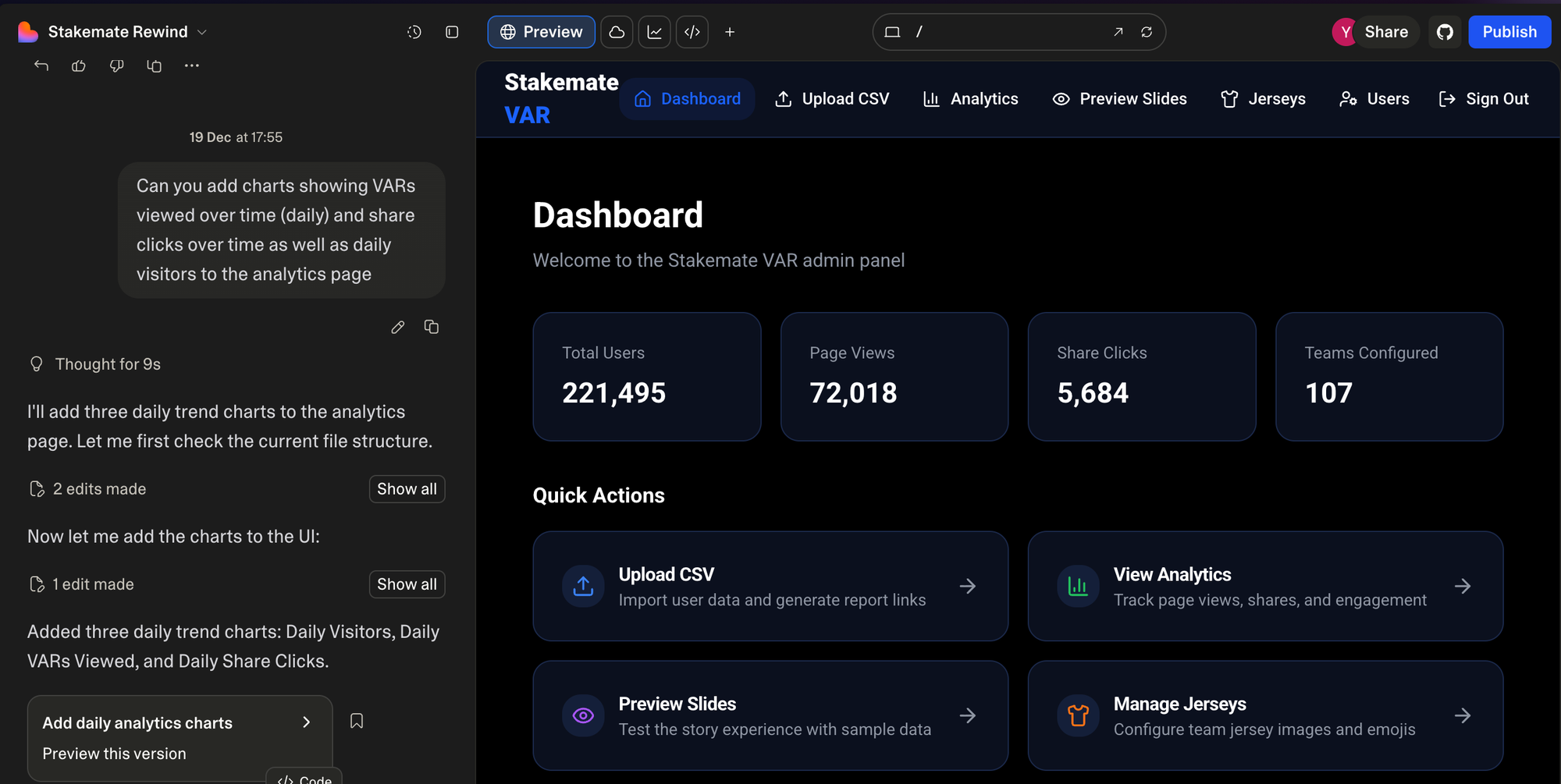
Once you’ve got all of this in place, it’s time to build your wrapped frontend. In the past, this project would take months of back and forth with devs to get across the line. But in the age of AI, any PMM can build this in about a week using AI coding tools.
I used Lovable to build Stakemate VAR, but you would probably be able to do it using Cursor or other similar tools. Explain the project to the AI, build analytics dashboards and a back office to manage the data, and finally have your designers play around with it for a few hours to make sure it is on-brand. Then you’re ready to launch.
Stakemate VAR involved using unique links tied to each user ID which we uploaded to our CRM, and sent to users via email and push notifications. Clicking on the link then took them directly to their unique yearly wrapped report which they could share with their friends.
Obviously, you’ll need to build this according to your requirements, so there is no one-size-fits-all approach. Just know AI app builders are a lot easier to use than you may think.
Please just make sure to run security checks, limit user access to data, and ask your backend engineers to quickly check the codebase for security vulnerabilities (I take no responsibility if your data is leaked or anything else goes wrong).
A yearly wrapped built for loyalty
Hopefully, this guide can be helpful for you to decide whether you should launch a wrapped, and serve as a good blueprint for exactly how to do this. If your product doesn’t already have soft signals of loyalty, brand love or organic sharing, then your resources are probably best spent elsewhere as Wrapped won’t create it.
If you do decide to build a similar initiative, following this process should give you the tools to justify your reasoning (not just doing it because Spotify do), the analytics to measure actual uplift (for example by tracking the share button clicks), and hopefully strong results in terms of brand and product uplift.


Product marketing insider
Thank you for subscribing
Level up your product marketing career & network with product marketing experts.
An email has been successfully sent to confirm your subscription.
 Follow us on LinkedIn


.svg)
Start the conversation
Become a member of Product Marketing Alliance to start commenting.
Sign up now