











Templates and frameworks to pair with this playbook
- Your personal positioning framework
- Product marketing interview questions
- Product marketing job description templates
Related certifications
There are thousands of talented product marketers looking for work right now, and thousands of open PMM roles waiting to be filled. So why does it feel like neither side can find the other?
If you're a candidate, you might be applicant number 244 on a posting that's been open for weeks. If you're a hiring manager, you're probably wading through hundreds of resumes and still wondering where the right person is. We call this gap the hiring canyon, and we see it from both sides of the table every day.
We're Yi Lin Pei and Jonathan Pipek. Between us, we've built and led more than five PMM teams, coached 400+ product marketers through their job searches, and advised dozens of companies on their PMM hires. Everything in this piece comes from that work. Here’s what we'll cover:
- Why the hiring canyon exists and the three patterns behind it
- How to get focused, whether you're the candidate or the hiring manager
- How to get clear on what good looks like before the first interview
- How to activate the right channels instead of applying (or posting) and hoping
- Five things to remember, whether you're hiring or looking to get hired
Welcome to the hiring canyon
On the candidate side, there are more PMMs looking for work than we've seen in years. Around 200,000 tech jobs have been cut this year, which means thousands of talented product marketers are searching for their next role.
On the employer side, many companies are still hiring. 24,800 PMM roles were posted last year, and PMM hiring in the U.S. is projected to grow 16.3% through 2027.
Neither side is short of options, and yet companies are taking 37% longer to hire than ever before. So what's going on? We've spotted three patterns that explain the disconnect:
- Smaller teams, broader range: Companies that used to have three to five PMMs now have one to three. Each role covers more ground, as teams are asked to do more with less.
- Risk-averse hiring: When teams shrink, every seat matters more. Companies slow down, get cautious, and look for what feels like the safest possible hire.
- A safer, costlier definition of fit: All that pressure pushes both sides to lean on familiar markers of fit, like recognizable company names and near-exact matches to the job description, meaning the person who could do the job often gets missed.
Closing the hiring canyon takes effort from both sides. We boil it down to three steps: get focused, get clear on what good looks like, and activate the right channels.
For expert insights like this, in full, every Friday, sign up for Pro+ membership.
You'll also get access to 30+ certifications, a complimentary Summit ticket every year, and 130+ product marketing templates.
So, what are you waiting for?
Step one: Get focused
Candidates: Build your own ICP
Most of us have led or supported a company's positioning, but almost none of us do it for ourselves. That's understandable, because positioning is hard. But if you position yourself for every company and every role, you end up sounding just like everybody else.
Getting focused starts with creating your own ICP, in this case, an ideal company profile. Identify the types of companies and roles where you're most likely to be a strong fit. Think about the go-to-market motions they run, their size and stage, the industries or verticals, and the specific skills and strengths those roles need.
From there, you can build targeted, differentiated positioning. Compare "I help organizations turn strategy into repeatable commercial execution" with "Product Marketing leader with 12 years of experience building enterprise cybersecurity and infrastructure businesses from $100M to $500M ARR." The first sounds like one of many. The second sounds like a market of one.
So, next time you're looking at a job posting, ask yourself one question: what would make you the best hire for that specific company? If you can answer it with confidence, you've narrowed in on your positioning.
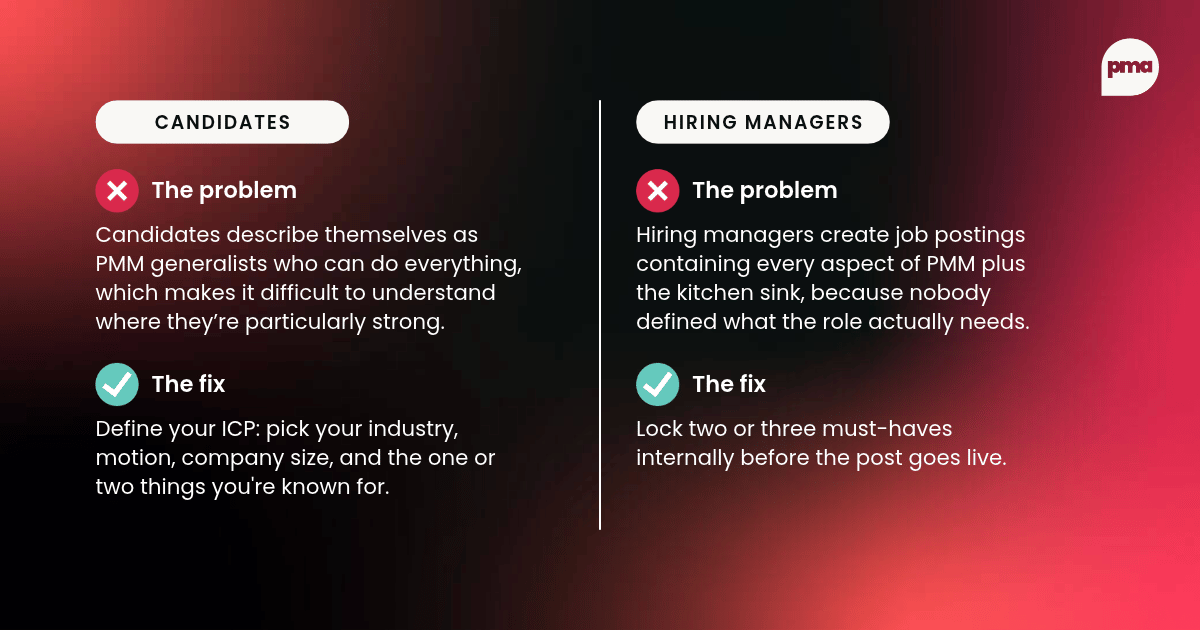
Hiring managers: Scope the role before you post it


Product marketing insider
Thank you for subscribing
Level up your product marketing career & network with product marketing experts.
An email has been successfully sent to confirm your subscription.
 Follow us on LinkedIn



.svg)